

Updated: October 2, 2026
Originally published: June 10, 2020
TL;DR
A practical camping kitchen does not need to be complicated. Start with cookware, cooking utensils, cups, eating utensils, and a durable way to carry everything. Choose compact, durable tools that match your campsite, cooking method, group size, and available storage.
Quick Answer
The essential kitchen tools to bring camping are a pot and pan, tongs or a spatula, a spoon, a cup, eating utensils, and a compact storage solution. If you are cooking for a group, add a utensil roll or larger organized bag.
The right setup depends on whether you are car camping, backpacking, cooking over a campfire, using a portable stove, or preparing meals for several people.
What Are Kitchen Essentials for Camping?
Camping kitchen essentials are the cooking, preparation, eating, and storage tools you need to prepare meals outdoors without carrying unnecessary equipment.
The best camping kitchen setup prioritizes function, durability, compact storage, and easy cleanup. You do not need to bring your entire kitchen. Instead, choose tools that can perform multiple jobs and pack together efficiently.
Camping Kitchen Essentials Checklist
Before leaving for a camping trip, check that you have:
- Pot suitable for your cooking method
- Pan or skillet
- Tongs
- Spatula or turner
- Cooking spoon
- Cup or mug
- Fork
- Knife
- Spoon
- Utensil roll or compact organizer for group trips
- Chef bag, backpack, or other durable storage
- Knife protection if you are bringing sharp kitchen knives
- Cleaning supplies appropriate for the campsite
- Storage for food and waste according to campsite rules
For chefs bringing their everyday culinary equipment outdoors, organization matters just as much as the individual tools. A dedicated chef gear collection can help keep frequently used culinary equipment together when moving between kitchens, campsites, and other cooking environments.
Pots and Pans Oh My!
One of the most important camping kitchen essentials is also one of the bulkiest: cookware.
A pot and pan give you far more flexibility than relying only on foods that can be cooked directly over a fire. You can boil water, make soups, cook grains, sauté ingredients, prepare sauces, and build complete meals depending on your campsite cooking setup.


What To Look For:
Choose a practical size.
Your pot and pan should be large enough to prepare the amount of food you actually plan to eat. For solo camping, a smaller set may be enough. For families or groups, larger cookware will be more practical.
Choose durable cookware.
Camping cookware needs to handle heat, transportation, and outdoor conditions. Aluminum is common because it is relatively lightweight and easy to clean, while other metals may provide different combinations of durability and heat performance.
Look for nesting pieces.
Space is valuable when camping. A pot, pan, lid, and other pieces that fit together can reduce the amount of room your cookware occupies in your bag or vehicle.
Match the cookware to your cooking method.
Before buying a camping cookware set, check whether it is appropriate for your stove, campfire setup, or other cooking method. The right cookware for a portable stove may not be the same as what you want over an open fire.
Think about the complete loadout.
A cookware set is only useful if you can transport it along with your other essentials. Prioritize the pieces you will actually use rather than packing every available option.


A Tong, A Spatula, and A Spoon
Once you have cookware, you need something to actually handle the food.
Tongs, a spatula, and a cooking spoon cover many common outdoor cooking tasks. For a minimalist setup, choose the combination that matches what you plan to cook rather than bringing every possible utensil.
What To Look For:
Which one should you choose?
A multipurpose cooking utensil can save space, particularly if you are trying to keep your camping kitchen compact. However, separate tools can be easier to use when preparing multiple foods at once.
Choose heat-resistant materials.
Stainless steel and titanium are common choices for outdoor cooking tools because they are durable and can handle high temperatures. If the utensil becomes hot during cooking, use an appropriate grip or handle to protect your hands.
Check the size.
A compact utensil is not automatically the best choice. A tool that is too short can put your hands closer to heat and make cooking less comfortable.
Think about how the utensil will be stored before choosing its size.
Prioritize useful functions.
If a single tool can perform several jobs without becoming difficult to use, it can be a good choice for a compact camping kitchen.


Cups Can Be Useful
A cup may seem like a minor part of your camping kitchen, but it can serve several purposes beyond drinking.
A compact cup can be used for coffee, water, hot drinks, measuring smaller amounts, or portioning ingredients depending on the situation.
What To Look For:
A cup doesn't need to be large.
For most camping trips, a standard-sized cup is enough for drinks. If you need to carry larger quantities of water, use a bottle or dedicated water container instead.
Pick a suitable material.
Silicone can be useful when compact storage is important because many silicone camping cups can collapse for transportation. Metal and other durable materials can also work depending on your priorities.
Make sure it is compact.
Collapsible cookware and drinkware can save valuable space. A cup that folds or collapses can be stored inside a larger container or packed into a small pocket when not in use.
Think about temperature.
If you plan to use the cup for hot drinks, check that it is designed for the temperatures you expect to encounter. A lightweight cup is only useful if it remains comfortable and safe to handle.


Fork, Knife, and Spoon Swiss Army Tool
Once the food is cooked, you still need a way to eat it.
A compact fork, knife, and spoon set can make meals much easier at the campsite. For solo trips, a folding utensil or combination tool may reduce the amount of space required.
What To Look For:
Why not bring all three?
A fork, knife, and spoon each serve different purposes. If you have enough space, bringing all three is often more practical than trying to make one utensil do everything.
Keep it simple.
You do not need an elaborate utensil system for every camping trip. Choose something durable, easy to clean, and appropriate for the type of food you plan to prepare.
Will it fit in your bag?
Compact folding utensils are convenient because they can be stored almost anywhere. If you are carrying full-size eating utensils, keep them together so they do not become scattered throughout your gear.
If you are also carrying sharp kitchen knives, keep their blades separated from other equipment during transportation. Knife guards can provide dedicated protection for individual knife blades when storing or transporting a knife kit.


Utensil Roll For Families
If you are camping with a group, a utensil roll can be more practical than carrying individual forks, knives, and spoons loose inside a bag.
A roll gives every piece a designated place and can make it easier to keep the group’s eating utensils together.
What To Look For:
Make sure it is actually a utensil roll.
A useful utensil roll should have individual compartments or pockets for organizing multiple pieces of flatware. Once packed, it should roll or fold into a compact form.
Choose durable material.
Outdoor gear can be exposed to dirt, moisture, abrasion, and repeated handling. Materials such as polyester or nylon can be practical choices for a camping utensil organizer.
Match the capacity to your group.
A roll designed for one or two people may not be enough for a larger group. Count the number of forks, knives, and spoons you actually need before choosing the size.
Keep cleanup in mind.
A utensil roll should be easy to wipe down or clean after use. Keeping dirty utensils contained also helps prevent the rest of your camping gear from getting messy.
Carry it All in a Chef’s Bag
Finally, you need a way to transport your cooking tools.
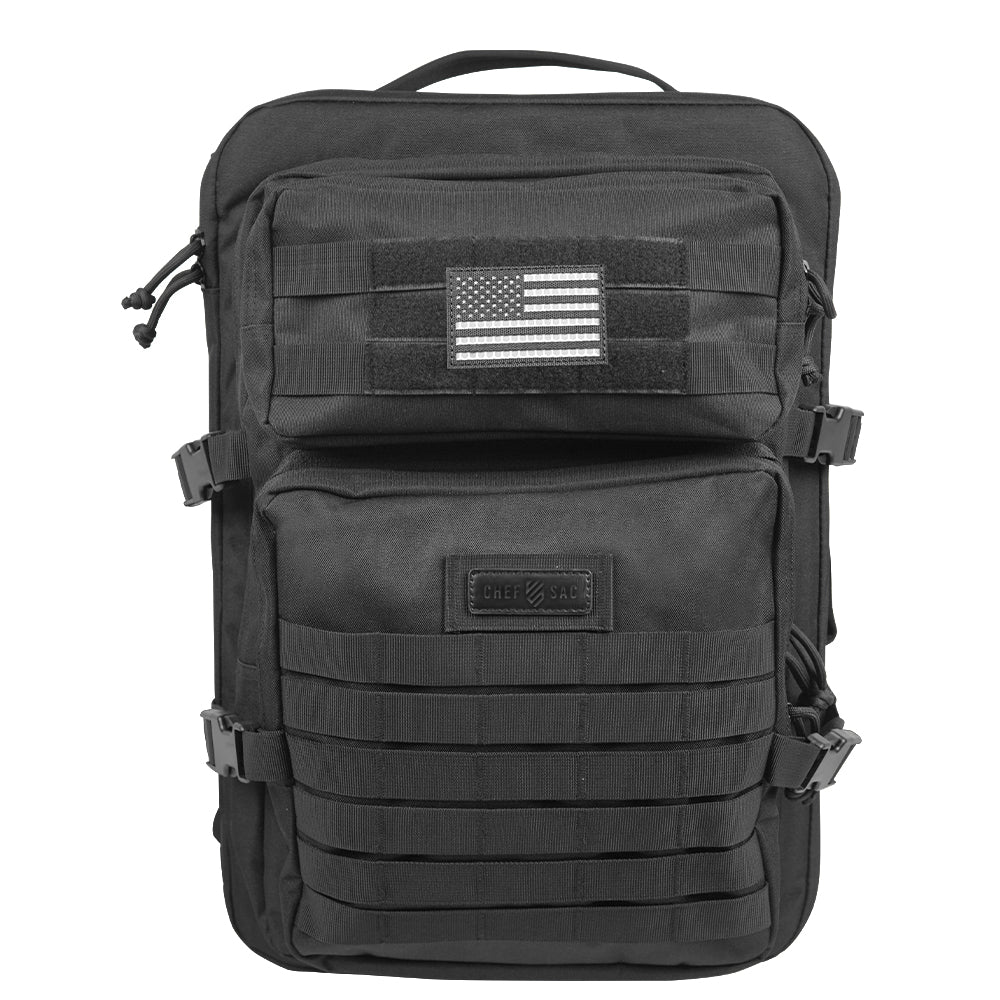
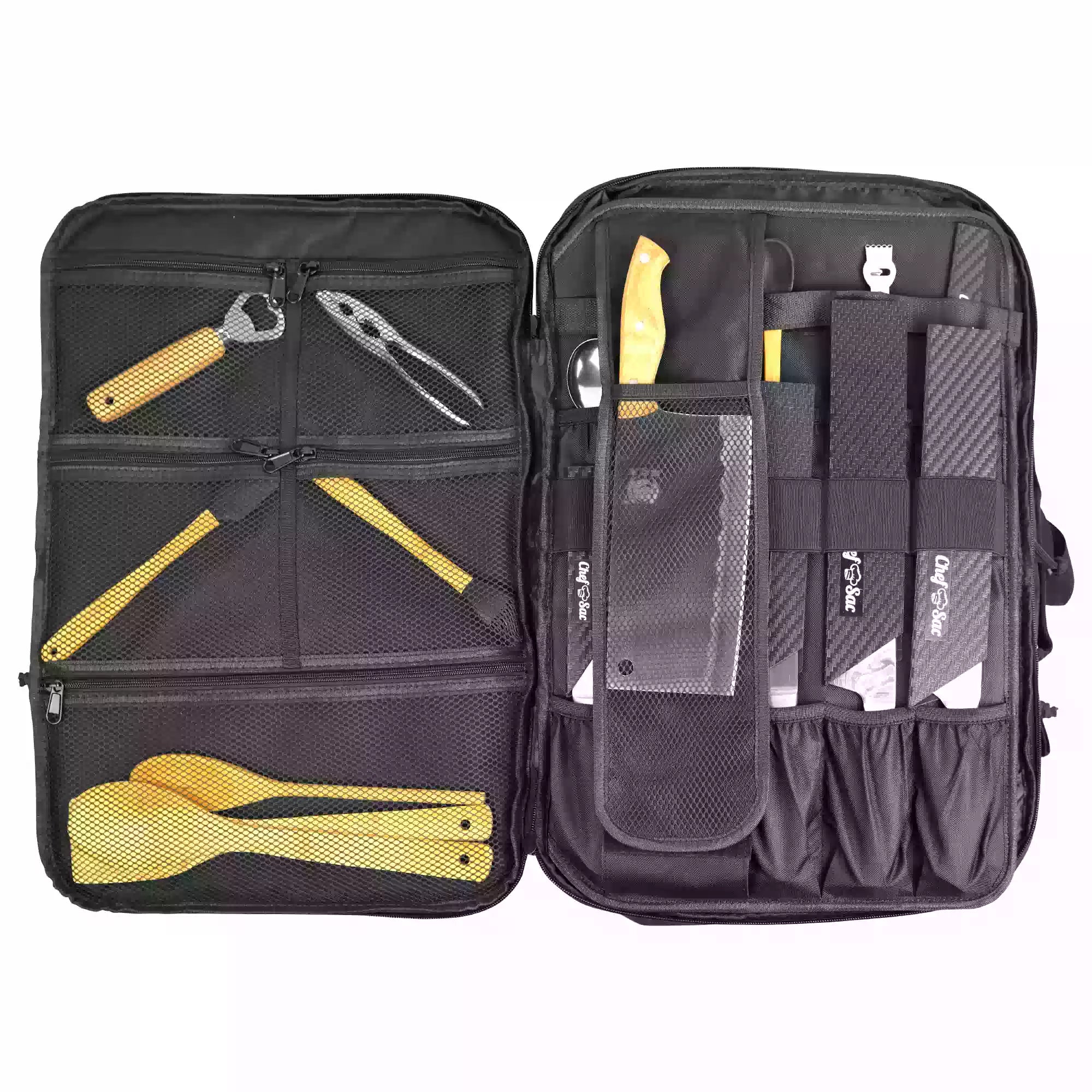
A dedicated chef bag, chef backpack, or other organized carry system can make it easier to move knives, utensils, and cooking equipment between your home, vehicle, campsite, and other cooking locations.
What To Look For:
Find a bag big enough.
Your storage system should accommodate the tools you actually bring. A small knife roll may work for a limited knife kit, while a larger chef bag or backpack can provide room for additional cooking utensils and accessories.
Look for organized storage.
Separate compartments and dedicated tool slots make it easier to find what you need without unpacking the entire bag.
Make sure it is durable.
Camping puts more demands on your gear than simply carrying it from your kitchen to your car. Look for materials and construction designed for repeated transportation and everyday use.
Consider how you will carry it.
A backpack can be useful when you need both hands free while traveling to and from a campsite. It can also distribute the weight of your cooking gear across both shoulders, making it practical when you have several tools to carry.
For chefs who want an organized way to transport their cooking equipment, the Tactical Chef Knife Backpack XL provides dedicated storage for knives and other culinary tools, making it a practical option for taking your kitchen essentials on the go.
How Do You Choose Camping Kitchen Tools?
The best camping kitchen tools are not necessarily the smallest or most expensive. Choose based on how you will actually cook.
Consider these five questions:
- How many people are you cooking for?
- What cooking method will you use?
- How much storage space do you have?
- Which tools can perform multiple jobs?
- How will you transport and protect everything?
For a short solo trip, a compact pot, pan, multipurpose cooking tool, cup, and eating utensil may be enough.
For a family or group trip, larger cookware, additional utensils, and an organized utensil roll may make more sense.
For chefs bringing knives and professional culinary tools, organization and blade protection become more important.
Practical Camping Kitchen Setup
A simple camping kitchen can be organized into four groups:
| Category | Essential tools | Main consideration |
|---|---|---|
| Cooking | Pot, pan, tongs, spatula, spoon | Cooking method and heat |
| Drinking | Cup or mug | Compactness and temperature |
| Eating | Fork, knife, spoon | Easy storage and cleanup |
| Carrying | Utensil roll, chef bag, backpack | Organization and durability |
Before leaving, pack the tools by function rather than simply throwing everything into one bag.
Keep cooking utensils together, eating utensils together, and sharp tools separated from items that could damage their edges. This makes your equipment easier to find when you are cooking outdoors and makes packing up after the meal much faster.
FAQ
What kitchen tools should I bring camping?
The basic camping kitchen setup should include a pot, pan, cooking utensil such as tongs or a spatula, cooking spoon, cup, and eating utensils. Add tools based on your cooking method and group size.
What is the most important camping cooking equipment?
A suitable pot or pan is one of the most important pieces because it determines what meals you can prepare. The rest of your equipment should support the cooking method you plan to use.
Are camping cookware sets worth it?
They can be useful when the pieces nest together and match your cooking needs. A compact set can save space compared with carrying multiple separate pieces.
What should chefs bring camping?
Chefs may want to bring a focused selection of their most useful knives and cooking tools rather than their entire kitchen kit. A durable, organized bag can make transportation easier.
How do you organize kitchen tools for camping?
Group tools by function, use compact or nesting equipment where possible, and keep sharp tools protected and separated from other equipment.
Do I need a utensil roll for camping?
Not always. A utensil roll is particularly useful for families and groups because it keeps multiple forks, knives, and spoons organized in one place.
Key Takeaways
- Choose camping kitchen tools based on your cooking method and group size.
- A pot and pan provide a flexible foundation for outdoor cooking.
- Tongs, spatulas, and cooking spoons cover many everyday cooking tasks.
- Compact cups can save space without sacrificing usefulness.
- Bring a fork, knife, and spoon when practical rather than relying on one utensil for everything.
- A utensil roll can keep group flatware organized.
- Chefs carrying knives should prioritize organization and blade protection.
- The best camping kitchen setup is the one you can actually transport, use, clean, and pack away efficiently.
About the Author
Keith Chiu is the founder of Chef Sac, a chef gear brand built for culinary professionals, culinary students, line cooks, caterers, private chefs, and serious cooks who care about how they carry their tools.
Chef Sac was created to give chefs a better way to organize, protect, and transport the tools of their craft. From knife bags and chef backpacks to aprons, knife guards, and everyday chef carry gear, Chef Sac is built for real kitchen workflows and the Culinary Mavericks who show up prepared.

