

Updated: September 22, 2026
Originally published: October 7, 2020
TL;DR
A good cutting board gives you a stable, practical surface for food preparation while helping you work more comfortably and protect your knives. The right size depends on your workspace, while wood, plastic, rubber, and bamboo each have different characteristics. Using separate boards for raw proteins and ready-to-eat foods can help reduce cross-contamination, and any board with deep, difficult-to-clean grooves should eventually be replaced.
Quick Answer: What Should You Know About Cutting Boards?
The most important things to consider when choosing and using a cutting board are its size, material, stability, cleaning requirements, food-safety use, maintenance, and condition.
For most kitchens, choose a board that gives you enough room to work without overwhelming your counter or storage space. Keep boards clean and dry between uses, use separate boards for raw proteins and ready-to-eat foods when possible, and replace boards once they become excessively worn or develop grooves that are difficult to clean.
What Is a Cutting Board?
A cutting board is a food-preparation surface designed to provide a stable place for chopping, slicing, mincing, portioning, and other knife work.
Cutting boards are available in materials such as wood, plastic, rubber, and bamboo. The best choice depends on how you cook, how much workspace you have, how you clean and maintain your equipment, and how often the board needs to be transported.
Checklist: Cutting Board Basics
Before choosing or replacing a cutting board, consider:
-
Size and available counter space
-
Knife-friendly surface
-
Material and durability
-
Stability while cutting
-
Ease of cleaning
-
Separate boards for raw proteins and ready-to-eat foods
-
Proper storage and drying
-
Maintenance requirements
-
Condition of the cutting surface
-
Portability if you work between kitchens
For cooks who regularly carry their tools between kitchens, culinary school, catering jobs, or other workspaces, a dedicated chef bag can also make transporting equipment more organized.
7 Things You Should Know About Cutting Boards
1. The Bigger, The Better
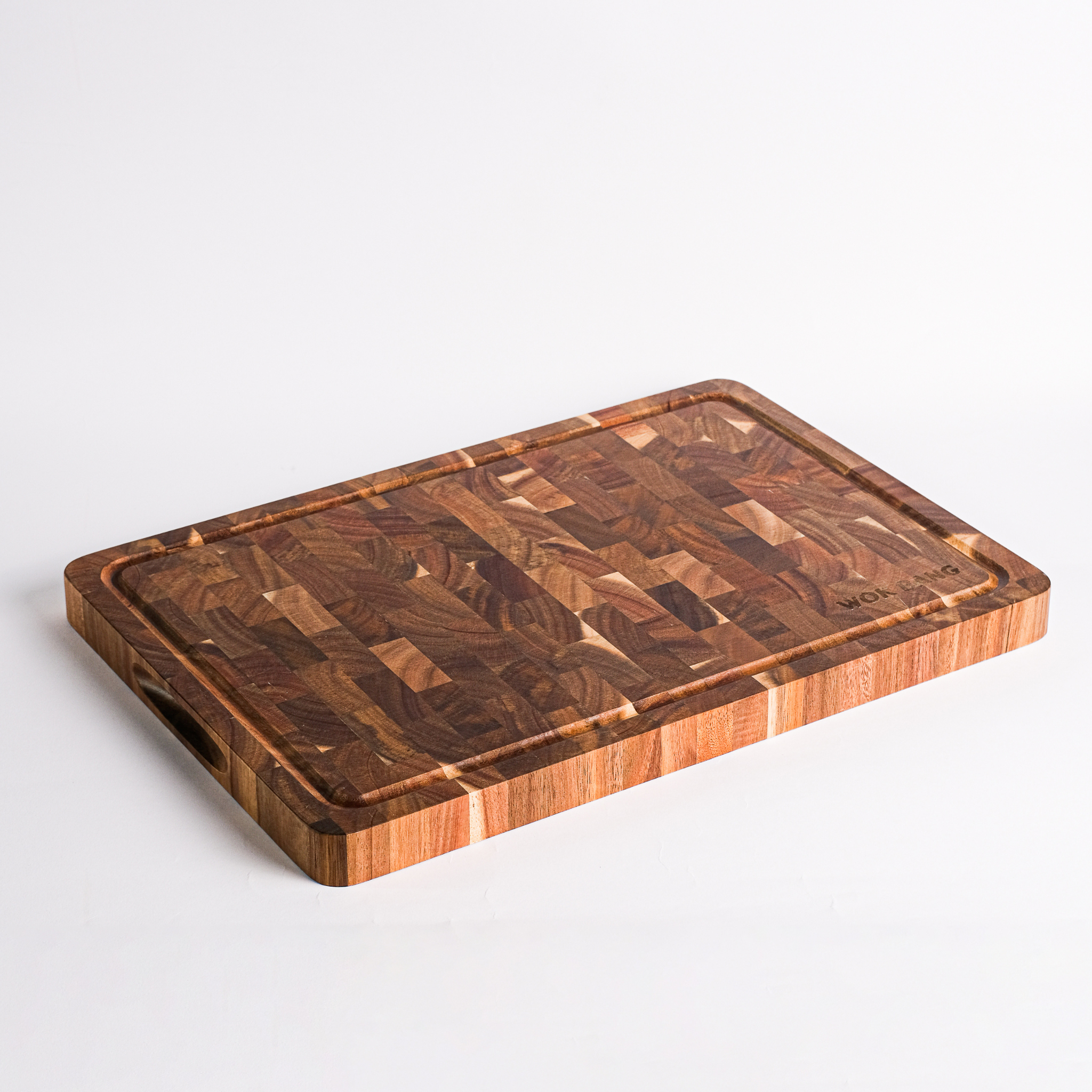
A larger cutting board can make food preparation more comfortable because it gives you more room to work.
Extra workspace can make it easier to position ingredients, control your knife, and keep chopped food from crowding the cutting surface.
That said, bigger is not automatically better. Choose a board that fits comfortably on your counter and still leaves you enough room to work around it. You also need to consider where you will store it when it is not being used.
For professional kitchens, the right size is usually the largest board that fits your station without interfering with other equipment or prep areas.
For cooks who regularly carry their tools between kitchens, culinary school, catering jobs, or other workspaces, a dedicated chef gear collection can make transporting equipment more organized.
2. We Live in a Material World

The material of a cutting board affects how it feels to work on, how it needs to be cleaned, and how long it may last.
Wood, plastic, rubber, and bamboo are all common choices. There is no single material that is perfect for every cook or kitchen.
Wooden boards are popular because they are durable, comfortable to work on, and can be attractive enough to serve as part of a kitchen setup. They do require appropriate cleaning, drying, and maintenance.
Plastic boards are lightweight and easy to clean, which makes them practical for many kitchens and useful when you need a board that can be sanitized frequently.
Rubber boards are also used in professional food-preparation environments and are valued for their durability and knife-friendly working surface.
The most important consideration is not simply the material. It is whether the board fits your workflow and can be properly cleaned and maintained.
3. Read Up Before Jumping Into the Bamboo Bandwagon
Bamboo looks like wood, but botanically it is a type of grass.
Bamboo cutting boards have become a popular alternative to traditional wooden boards because they are relatively durable, absorb less moisture than many hardwoods, and are widely available.
The good things about bamboo
-
Bamboo is a rapidly renewable plant.
-
It generally absorbs less moisture than many traditional woods.
-
It can provide a durable cutting surface.
-
It is widely available at different price points.
The not-so-good
Bamboo is relatively hard and dense compared with many traditional cutting-board woods. Some cooks may prefer a softer surface depending on their knives and cutting style.
The construction also matters. Bamboo boards can be made from laminated or bonded pieces, so pay attention to the manufacturer's materials and care instructions rather than assuming every bamboo board is identical.
The takeaway is simple: bamboo can be a practical option, but choose based on construction, maintenance, durability, and how the surface feels with your knives.
4. How Many Boards Are Enough?

For many kitchens, having at least two cutting boards is a practical setup.
A common approach is to use one board primarily for produce, bread, and other ready-to-eat foods and another for raw meat, poultry, or seafood.
The reason is cross-contamination. Raw proteins can carry harmful bacteria, so keeping their preparation separate from foods that will not receive another cooking step can reduce the opportunity for those bacteria to spread.
The boards do not necessarily have to be made from different materials. What matters most is keeping them clean, using them consistently for their intended purpose, and preventing raw-food juices from contaminating ready-to-eat foods.
If you prepare a lot of food or work in a professional kitchen, having additional boards can make it easier to maintain a clean and organized workflow.
5. Wooden Cutting Boards Need Proper Care

Wooden cutting boards can last for years when they are properly maintained.
The basic routine is straightforward: clean the board after use, allow it to dry thoroughly, and follow the care instructions provided by the manufacturer.
How to care for a wooden cutting board
-
Wash the board with hot, soapy water after use.
-
Rinse away soap and food residue.
-
Dry the board thoroughly before storing it.
-
Avoid leaving the board submerged in water.
-
Condition it with food-grade mineral oil when recommended by the manufacturer.
-
Keep an eye on the surface for excessive wear or deep grooves.
Do not automatically assume every wooden cutting board has identical care requirements. Some solid wood boards may be dishwasher-safe, while laminated or specially constructed boards may not be. Always follow the manufacturer's instructions.
The goal is simple: keep the board clean, dry, and in good condition.
6. Should I Bring My Own Cutting Board to School or Work?

Whether you should bring your own cutting board depends on your kitchen, school, workplace, and its existing equipment.
Many professional kitchens already provide cutting boards, so bringing your own may not always be necessary. If you do bring one, choose a size that fits your actual workflow rather than carrying the largest board you can find.
A smaller board can be much easier to transport between culinary school, work, catering jobs, demonstrations, and other kitchens.
You should also consider how you will transport the rest of your equipment. A dedicated chef knife backpack can help organize knives and other culinary tools when you need to move between locations.
For culinary students and working chefs, portability matters. The best setup is one that gives you the tools you actually use without creating unnecessary weight or clutter.
If you're building a portable kitchen kit, our guide to essential tools for the everyday chef bag can also help you think through what is worth carrying from one kitchen to another.
7. When Should You Replace a Cutting Board?
A cutting board does not have to last forever.
Over time, repeated knife work can create scratches, grooves, and other wear. Once a board becomes excessively worn or develops grooves that are difficult to clean properly, it is time to replace it.
Do not wait until a board is completely unusable.
Regularly inspect the surface for:
-
Deep knife grooves
-
Cracks or splits
-
Warping that affects stability
-
Damage that makes cleaning difficult
-
Persistent stains or residue that cannot be removed through normal cleaning
-
Excessive overall wear
A cutting board is a working tool. When its condition starts interfering with cleanliness, stability, or safe food preparation, replacing it is the practical choice.
FAQ: Cutting Boards
What size cutting board should I buy?
Choose the largest board that fits comfortably in your workspace while still leaving room for other equipment and allowing you to store it properly.
Is wood or plastic better for a cutting board?
Neither is universally better. Wood can provide a durable, comfortable cutting surface, while plastic is lightweight and easy to clean. Your cooking style, maintenance routine, and kitchen setup should determine which works best for you.
How many cutting boards should a kitchen have?
Two is a useful starting point: one for ready-to-eat foods such as produce and bread, and another for raw meat, poultry, and seafood. Larger kitchens may benefit from additional boards.
Can I use a bamboo cutting board?
Yes. Bamboo can be a practical cutting-board material, but it is harder and denser than many traditional woods. Pay attention to construction, manufacturer instructions, and how the surface works with your knives.
How do I clean a wooden cutting board?
Wash it with hot, soapy water after use, rinse it, and dry it thoroughly. Follow the manufacturer's care instructions for sanitizing, dishwasher use, and conditioning.
When should I replace my cutting board?
Replace it when it becomes excessively worn or develops deep grooves, cracks, or other damage that makes it difficult to clean or maintain properly.
Should chefs bring their own cutting board to work?
Not necessarily. Many kitchens provide cutting boards. If you prefer your own board or need one for culinary school, catering, demonstrations, or other mobile work, choose a size that is practical to transport.
Key Takeaways
-
Choose a cutting board that gives you enough workspace without overwhelming your station.
-
Wood, plastic, rubber, and bamboo each have different characteristics.
-
Bamboo is a grass, not a traditional wood, and its hardness should be considered when choosing a board.
-
Using separate boards for raw proteins and ready-to-eat foods can help reduce cross-contamination.
-
Clean cutting boards after use and follow the manufacturer's care instructions.
-
Wooden boards may benefit from periodic conditioning with food-grade mineral oil when recommended.
-
Inspect cutting boards regularly for excessive wear and deep grooves.
-
Replace boards once they become difficult to clean or maintain properly.
-
If you work between kitchens, consider the size and portability of the tools you carry.
About the Author
Keith Chiu is the founder of Chef Sac, a chef gear brand built for culinary professionals, culinary students, line cooks, caterers, private chefs, and serious cooks who care about how they carry their tools.
Chef Sac was created to give chefs a better way to organize, protect, and transport the tools of their craft. From knife bags and chef backpacks to aprons, knife guards, and everyday chef carry gear, Chef Sac is built for real kitchen workflows and the Culinary Mavericks who show up prepared.

