

Updated: October 16, 2026
Originally published: June 4, 2020
TL;DR
The best knife bag depends on how many knives and tools you carry, how much protection and organization you need, your preferred material, and your budget. Knife rolls are compact, cases offer organized storage, and chef knife backpacks are useful for carrying a larger kit between kitchens, culinary school, catering jobs, and events.
Quick Answer
How do you choose the right knife bag?
Start by counting your knives and other tools, checking their lengths, and deciding how you will transport them. Then compare storage capacity, individual knife slots, material, portability, protection, and price. Choose a carrier that fits your actual kit without forcing you to overpack it.
What Is a Knife Bag?
A knife bag is a storage and transport solution designed to carry kitchen knives and, depending on its design, other culinary tools. Common types include knife rolls, knife cases, and chef knife backpacks.
The right option depends on your workflow. A compact roll may be sufficient for a few knives, while a case or backpack may suit chefs who carry a broader selection of knives, utensils, and personal work essentials.
Knife Bag Buying Checklist
Before choosing a knife bag, consider these points:
-
Capacity: Does it fit your complete knife kit and other essential tools?
-
Blade length: Can it accommodate your longest knives and cleavers?
-
Organization: Are there separate slots and compartments for different tools?
-
Protection: Can the knives be secured and kept from shifting during transport?
-
Material: Is the fabric or outer material suitable for your working conditions?
-
Portability: Would you prefer a roll, a handled case, or a backpack?
-
Additional storage: Do you need space for a honing rod, pens, a notebook, or a tablet?
-
Budget: Does the bag offer the features you actually need?
-
Maintenance: Can you clean and care for the material appropriately?
Once you know what your kit requires, it becomes easier to compare different chef bags and culinary gear without paying for capacity or features you will not use.
What Should You Consider When Choosing a Knife Bag?
1. Size and Capacity
The first thing to consider is how much equipment you need to carry. Your knife bag should fit your knives securely, including the longest blade in your kit, without forcing you to squeeze tools into unsuitable spaces.
Think beyond the number of knives you own. You may also carry a honing rod, peeler, spatula, thermometer, measuring tools, or other essentials.
Check the following before buying:
-
Number of knife slots
-
Maximum supported blade length
-
Space for cleavers and specialty knives
-
Additional pockets for utensils
-
Compartments for personal essentials
-
Overall dimensions and packed weight
A smaller bag can be practical for a culinary student with a basic knife kit. A chef who travels between restaurants, caters events, or works as a private chef may benefit from a larger carrier with more dedicated storage.
Separate knife slots are useful because they help keep tools organized. However, never assume that a slot alone protects a blade completely. Use suitable blade guards where needed and make sure knives are secured before carrying the bag.
2. Material
The material affects the bag's weight, appearance, maintenance, and resistance to everyday wear. Common materials include canvas, waxed canvas, leather, nylon, polyester, and, in some cases, rigid metal or other hard materials.
No single material is best for every chef. Construction, lining, stitching, protective coatings, closures, and the way the bag is used also matter.
Canvas
Canvas is a woven fabric often chosen for its traditional appearance and practical construction. Its cleaning needs depend on the canvas type and any finish applied.
Ordinary canvas may absorb stains, particularly grease and oil. Waxed canvas has an added finish that changes how it responds to moisture and cleaning. Follow the manufacturer's instructions rather than treating both types identically.
Waxed Canvas and Leather
Waxed canvas and leather are often used for knife rolls and other premium-style carriers. They can offer a distinctive appearance, but they may need more specialized care than ordinary synthetic fabric.
Leather can be affected by excessive moisture and unsuitable cleaners. Waxed canvas may also require specific maintenance to preserve its finish. Check the care instructions before washing or treating either material.
If you are comparing compact knife rolls with larger carriers, read our knife roll bag comparison for more detail on storage and organization.
Nylon and Polyester
Nylon and polyester are synthetic fabrics commonly used in travel bags and chef backpacks. Both can be suitable for regular use, but their performance depends on their weave, construction, and any protective coating.
Some polyester bags are water-resistant, but that does not mean every polyester bag is waterproof. Likewise, a nylon bag should not automatically be assumed to withstand complete immersion in water.
For example, the Vintage Chef Knife Backpack v4.0 is made from 600D premium polyester and features water-resistant construction. Always check the material specifications for the particular model you are considering.
Metal or Rigid Cases
Rigid cases can offer a more structured exterior than a soft fabric carrier. They may be useful when a kit needs additional protection from impacts or pressure.
The trade-offs can include added weight, bulk, and less flexibility when packing. Check the interior organization and the way the case secures each knife before choosing one.
3. Style and Portability
Knife bags come in several designs. The right style depends on how you work, how much gear you carry, and how you prefer to transport it.
The four common formats are:
-
Knife roll
-
Knife case
-
Chef knife backpack
-
Rigid toolbox or hard case
Each has different strengths. A roll prioritizes compactness, a case can provide organized storage, and a backpack combines storage with hands-free carrying.
Consider where you will use the bag. Carrying a small knife kit to one workplace is different from bringing a complete culinary setup to a catering event or cooking competition.
4. Price and Value
Knife bag prices vary based on material, capacity, construction, organization, and brand. Instead of choosing solely by price, consider how well the bag fits your equipment and how frequently you will use it.
If you are starting culinary school, a basic roll may meet your needs. If you already own a larger collection of knives and utensils, a more spacious case or backpack may be a better long-term fit.
Before buying, ask yourself:
-
Will the bag fit my current kit?
-
Will it accommodate tools I regularly use?
-
Are the knife slots and closures suitable for my equipment?
-
Is it comfortable to carry when fully packed?
-
Can I maintain it without damaging the material?
A useful bag is one that supports your actual work rather than one that simply has the most pockets or the highest price.
What Are the Main Types of Knife Bags?
The following options cover the main carrier styles discussed in this guide. Each has advantages and limitations, so choose based on your equipment and routine rather than assuming one style suits every chef.
Knife Rolls
A knife roll is a flexible carrier that folds or rolls around knives and typically closes with straps, ties, or another fastening system. It is often a compact choice for transporting a smaller collection of knives.
Padded Roll Bag
Material: Often canvas or another fabric
Capacity: Usually small to medium, depending on the design
Best for: Culinary students, home cooks, and chefs with a compact knife kit

A padded knife roll can be a practical starting point for someone who needs to carry a basic selection of knives without bringing a full backpack or case.
Its main limitation is space. A compact roll may not have room for many extra utensils, and unusually long or wide tools may not fit its slots.
If you work around grease and frequent spills, consider how easily the fabric can be cleaned. Ordinary canvas may need more attention when oil stains occur, while waxed or coated fabrics have different care requirements.
Waxed Canvas and Leather Knife Roll
Material: Waxed canvas, leather, or a combination
Capacity: Usually compact to medium, depending on the model
Best for: Chefs who prefer a traditional roll with a distinctive finish
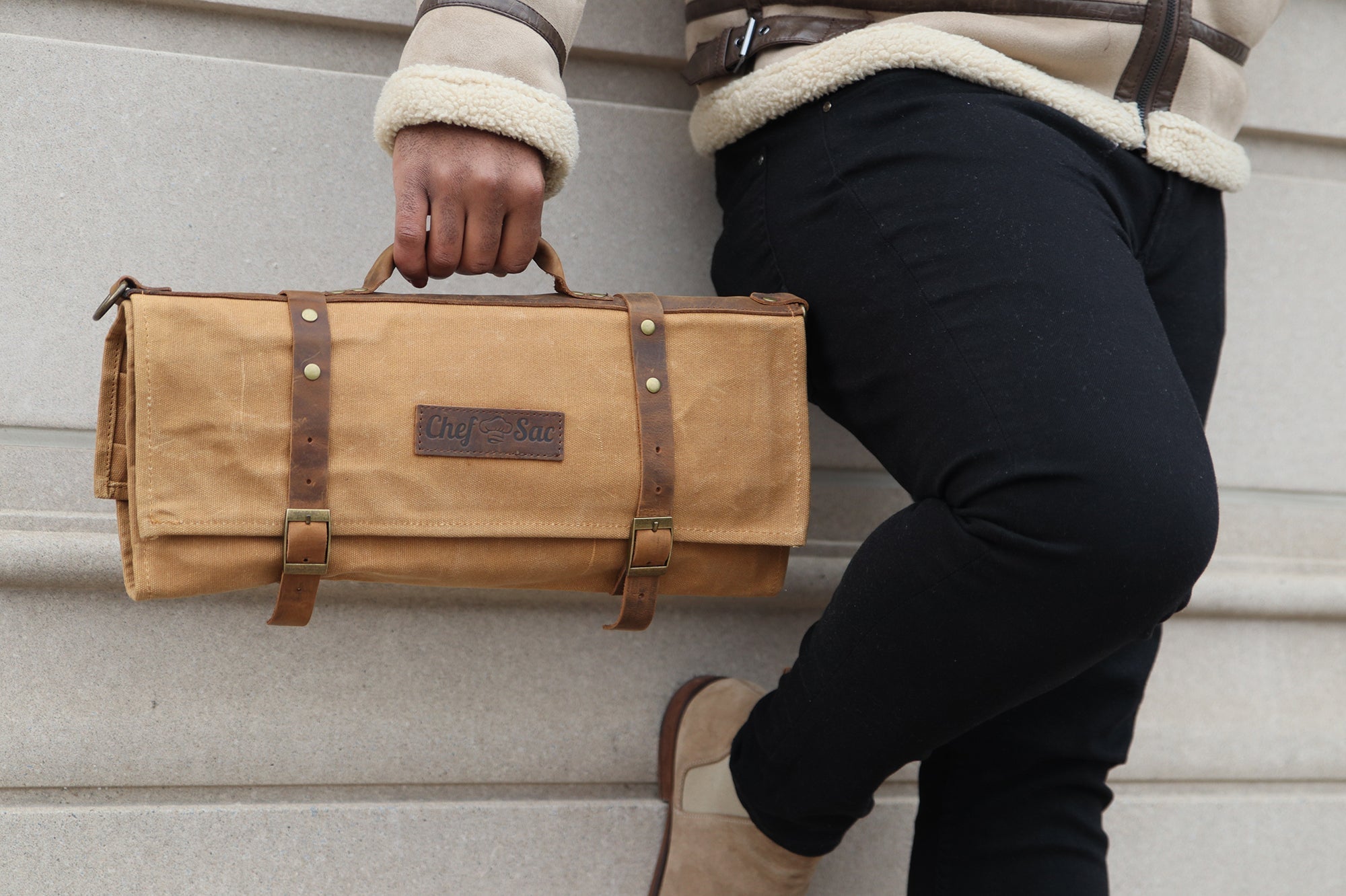
Waxed canvas and leather rolls combine a compact format with a classic appearance. Depending on their design, they can provide dedicated slots for knives while remaining easy to carry.
The trade-offs include care requirements, weight, and limited space for additional utensils. Waxed canvas and leather are not maintenance-free, and their finishes should be cleaned according to the manufacturer's guidance.
Do not assume a waxed canvas bag is completely waterproof or that a coating alone will prevent knives from rusting. Keep blades clean and dry before storing them.
Polyester Knife Roll
Material: Polyester or another synthetic fabric
Capacity: Small to medium, depending on the design
Best for: Cooks who want a compact roll with space for a few additional tools
A polyester knife roll can be an option for chefs who want a lightweight carrier with dedicated storage. Some designs include extra pockets for utensils and small accessories.
Polyester can be practical for everyday use, but stain resistance and water resistance vary by fabric and finish. Spot-clean the bag as directed and avoid harsh cleaners that may damage its coating or color.
Knife Case Bag
Material: Often polyester or another textile; some models use rigid construction
Capacity: Medium to large, depending on the design
Best for: Chefs who need organized storage for knives and additional utensils

A knife case often opens like a book or piece of luggage, exposing multiple panels and storage compartments. This layout can make it easier to see and access a broader kit.
Depending on the model, a case may include dedicated knife slots, zippered pockets, and space for small culinary tools. Before purchasing, check the number of slots, maximum blade length, and the layout of its interior compartments.
A larger case can hold more equipment than a compact roll, but it may also become heavier and bulkier when fully packed. Make sure the carrying handle, closures, and interior restraints are appropriate for the weight and tools you intend to transport.
Chef Knife Backpacks
Material: Varies by model; polyester is common
Capacity: Medium to large, depending on the design
Best for: Chefs, culinary students, caterers, and private chefs who carry a broader kit

A chef knife backpack is designed to carry knives and other culinary essentials in a backpack-style format. It can be useful for people who regularly move between home, culinary school, restaurant shifts, demonstrations, and events.
Many designs include dedicated knife slots and additional compartments for utensils, notebooks, tablets, or other work essentials. The exact capacity and features vary by model, so check the product specifications before buying.
A backpack can distribute the load across both shoulders, although comfort still depends on the bag's fit, straps, padding, and how heavily it is packed.
How Do Knife Rolls, Cases, and Backpacks Compare?
| Feature | Knife roll | Knife case | Chef knife backpack |
|---|---|---|---|
| Typical capacity | Small to medium | Medium to large | Medium to large |
| Portability | Compact and flexible | Depends on size and handle | Hands-free, backpack-style carry |
| Organization | Primarily knife slots | Multiple panels and compartments | Knife slots plus additional pockets |
| Extra tool storage | Limited to moderate | Moderate to extensive | Moderate to extensive |
| Main consideration | Available slots and blade fit | Size, weight, and interior layout | Comfort, packed weight, and capacity |
| Best suited for | Smaller knife kits | Organized, larger kits | Carrying knives and broader work essentials |
These are general comparisons. Individual products can differ significantly, so use the listed dimensions, blade-length limits, and storage features to make your decision.
How Should You Choose a Knife Carrier for Your Work?
The best choice depends on your working routine and the equipment you carry.
For Culinary Students
A compact roll may be enough if your course requires only a small set of knives. If you also need to bring utensils, textbooks, a notebook, or other supplies, compare cases and backpacks with additional compartments.
For Restaurant Chefs and Line Cooks
Think about how often you carry your kit and how much equipment you need between shifts. Separate knife slots, secure closures, and a bag that is easy to clean can be useful for everyday transport.
For Caterers and Private Chefs
You may need to bring a wider selection of tools to different locations. A case or backpack with dedicated storage can make it easier to organize your kit, although the best option depends on how much you need to carry and how you travel.
For Cooking Competitions and Events
Prioritize a carrier that fits your complete tool list, including specialty knives and longer blades. Check the dimensions before packing, secure each knife properly, and make sure the bag is suitable for the conditions in which you will transport it.
How Can You Transport Knives Safely?
A suitable carrier helps organize your equipment, but safe packing also depends on how each knife is secured.
-
Use appropriate blade guards or sheaths when required.
-
Place each knife in a suitable slot or compartment.
-
Secure knives so they cannot shift freely during transport.
-
Make sure the bag closes properly without forcing the blades against the fabric or closures.
-
Keep blades clean and dry before packing.
-
Follow applicable rules when transporting knives, particularly when traveling or using public transport.
Never carry loose, exposed knives in an ordinary backpack. A carrier should be suitable for knives and should keep them secured throughout the journey.
FAQ: Choosing a Knife Bag
What type of knife bag is best for a beginner?
A compact knife roll can be a good starting point for someone with a small knife kit. If you also need to carry utensils or personal essentials, compare cases and backpacks before deciding.
Are polyester knife bags better than canvas bags?
Not universally. Polyester and canvas have different properties, and performance depends on construction, finish, and care. Consider capacity, cleaning requirements, durability, and the environment in which you will use the bag.
Are nylon and polyester the same material?
No. Nylon and polyester are different synthetic fibers. Both are used in bags, but their properties vary with the fabric construction and finish. Check the product's material specifications instead of assuming what a bag is made from based on appearance.
How many knives should a knife bag hold?
Choose a bag based on the number and sizes of knives you actually carry. Also consider whether you need room for a cleaver, honing rod, or other utensils. The total number of slots matters less if they do not fit your tools.
Do I need a knife backpack if I already own a knife roll?
Not necessarily. A roll may be sufficient for a compact kit. A backpack may be worth considering if you regularly carry additional tools, work essentials, or personal items alongside your knives.
Can I store other kitchen tools in a knife bag?
Many knife carriers include compartments for utensils and accessories. Check the product layout and make sure tools are stored securely so they do not damage knives, pockets, or the bag itself.
Key Takeaways
-
Choose a knife carrier based on your actual kit, blade lengths, and daily routine.
-
Compare capacity, organization, material, portability, and price before buying.
-
Knife rolls are compact, cases offer organized storage, and backpacks can accommodate a broader kit.
-
Material alone does not determine durability, water resistance, or ease of cleaning.
-
Secure knives with suitable blade protection and dedicated storage before transport.
-
Verify current product dimensions, materials, and slot counts before relying on specific specifications.
The right knife bag is the one that fits your tools, supports your workflow, and makes transporting your culinary kit more organized and secure.
About the Author
Keith Chiu is the founder of Chef Sac, a chef gear brand built for culinary professionals, culinary students, line cooks, caterers, private chefs, and serious cooks who care about how they carry their tools.
Chef Sac was created to give chefs a better way to organize, protect, and transport the tools of their craft. From knife bags and chef backpacks to aprons, knife guards, and everyday chef carry gear, Chef Sac is built for real kitchen workflows and the Culinary Mavericks who show up prepared.
