

Updated: October 16, 2026
Originally published: June 4, 2020
TL;DR
A well-packed chef bag should contain the tools you regularly use, including essential knives, a honing steel or appropriate sharpening tool, small prep gadgets, measuring tools, and a few useful extras. Choose items based on your role, menu, and destination kitchen, and protect sharp tools before transporting them.
Quick Answer: What Should You Pack in a Chef Bag?
Most chefs can start with these essentials:
-
A chef’s knife suited to their everyday prep
-
A paring knife for smaller, precise tasks
-
A serrated knife if bread or delicate items are part of the work
-
A boning knife when the job involves breaking down meat, poultry, or fish
-
A honing steel or suitable knife-maintenance tool
-
A peeler, grater, spatula, and measuring tools as needed
-
A notepad, pens, and permanent markers
-
A small, securely sealed spice kit for recipes that require specific seasonings
-
Protective knife guards or another suitable blade-protection system
You do not need every tool on this list for every shift. Start with the items you use most, then add specialty tools based on your responsibilities and the kitchen you will be working in.
What Are the Essential Tools to Pack in a Chef Bag?
A chef bag is a way to organize and transport the tools you need between culinary school, restaurant shifts, catering events, private-chef jobs, and other work locations. The ideal setup is practical rather than oversized: pack reliable tools that suit your work, protect them properly, and avoid carrying unnecessary duplicates.
Once you have the right bag, the next step is deciding what belongs inside. There is no universal packing list for every chef, but a few categories provide a useful starting point.
Checklist: What Should You Pack Before Leaving for Work?
Use this checklist before heading to a new kitchen or event.
-
Check the menu, assignment, and expected prep tasks.
-
Pack the knives you need for the work.
-
Protect each knife with an appropriate guard, sheath, or secure knife roll.
-
Bring a honing steel or other suitable maintenance tool if you use one.
-
Add small prep tools such as a peeler or grater.
-
Pack measuring tools if precise quantities are important for the job.
-
Bring a notepad, pens, and markers for notes and labeling.
-
Pack specialty seasonings only when needed, using clean, sealed, food-safe containers.
-
Check whether the destination kitchen supplies larger or shared equipment.
-
Make sure everything is clean, dry, secure, and easy to locate.
A reliable chef bag helps keep these tools organized and protected while you travel between kitchens.
A dedicated chef knife backpack can help keep your essential knives and cooking tools organized as you travel between culinary school, restaurant shifts, and off-site jobs.
Knives
Knives are among the most important tools in a chef’s kit. The right selection depends on the ingredients you handle, your preferred cutting techniques, and the tasks you perform most often. One quality chef’s knife may be enough for many jobs, while specialized roles may require a more varied set.
Chef’s Knife

Best Value
Victorinox Fibrox Pro 8-inch Chef's Knife

High-end
Yoshihiro Gyuto Japanese 8.25-inch Chefs Knife
Best for: Everyday cutting, slicing, chopping, and general preparation.
A chef’s knife is one of the most versatile knives in a professional kitchen. It can handle a wide range of routine tasks, from chopping vegetables to slicing fruit and preparing ingredients for service.
Choose a knife that feels comfortable and balanced in your hand. Blade length, handle shape, weight, and maintenance requirements all matter more than choosing a knife solely because it is expensive.
Original examples to verify before publishing:
-
Value option: Victorinox Fibrox Pro 8-inch Chef’s Knife
-
Premium option: Yoshihiro Gyuto Japanese 8.25-inch Chef’s Knife
A dependable chef’s knife is a strong starting point for culinary students and experienced cooks alike. Protect the blade during transport and avoid placing an exposed knife loose inside your bag.
Santoku Knife

Best Value
Victorinox Rosewood 7-inch Santoku Knife

High-end
Yaxell Gou 6-1/2-inch Santoku Knife
Best for: Slicing, chopping, and preparing vegetables, proteins, and other everyday ingredients.
A santoku is a versatile alternative or complement to a Western-style chef’s knife. Its profile and cutting feel may suit chefs who prefer a different balance or blade shape.
Some santoku knives have a Granton-style edge with indentations intended to help reduce food sticking to the blade. The design does not guarantee that ingredients will never stick, but it can be a useful feature for some cutting tasks.
A santoku is optional if you already have a chef’s knife that meets your needs. Consider carrying one if you prefer its shape or if your work benefits from having both styles available.
Original examples to verify before publishing:
-
Value option: Victorinox Rosewood 7-inch Santoku Knife
-
Premium option: Yaxell Gou 6.5-inch Santoku Knife
Paring Knife
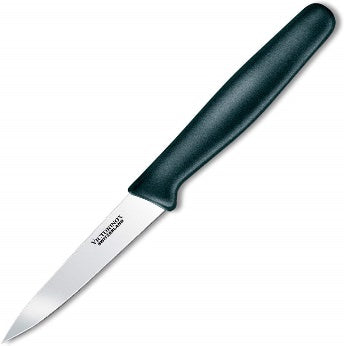
Best Value
Victorinox 3.25-inch Paring Knife

High-end
Wusthof Classic 3.5-inch Paring Knife
Best for: Small, precise tasks such as trimming, peeling, and preparing garlic or shallots.
A paring knife has a short blade that offers control for detailed work. It can be useful for jobs that are awkward to perform with a larger knife, such as trimming small fruits, preparing garnishes, or removing blemishes from vegetables.
Because it takes up little space, a paring knife can be a practical addition to a chef’s bag. Choose a handle that feels secure and a blade size that suits the tasks you perform most often.
Original examples to verify before publishing:
-
Value option: Victorinox 3.25-inch Paring Knife
-
Premium option: Wüsthof Classic 3.5-inch Paring Knife
Boning Knife

Best Value
Mercer 6-Inch Curved Boning Knife

High-end
Best for: Separating meat from bones and preparing poultry, meat, and fish.
A boning knife has a relatively narrow blade that helps with controlled cuts around bones and joints. The right blade depends on the ingredients and the amount of precision required.
A flexible blade may suit certain delicate tasks, while a stiffer blade may provide more control when working with firmer cuts. The best choice depends on the product being prepared and the chef’s technique.
A boning knife is especially useful for chefs who regularly break down proteins. If your work rarely involves this task, you may not need to carry one every day.
Original examples to verify before publishing:
-
Value option: Mercer 6-inch Curved Boning Knife
-
Premium option: Wüsthof 6-inch Boning Knife
Serrated Knife

Best Value
Mercer Culinary 10-ihnch Bread Knife

High-end
Shun Classic 9-inch Bread Knife
Best for: Cutting bread, pastries, and foods with a firmer exterior and softer interior.
A serrated knife has a toothed edge that can help cut through crusts without compressing the soft interior as much as some straight-edge knives might. Bread knives are a common example.
This tool can be particularly helpful for pastry chefs, bakers, and cooks who regularly prepare bread or delicate baked goods. For other kitchen roles, it may be a task-specific tool rather than an everyday essential.
Original examples to verify before publishing:
-
Value option: Mercer Culinary 10-inch Bread Knife
-
Premium option: Shun Classic 9-inch Bread Knife
Choose a knife suited to the products you prepare, and protect its edge carefully during transport.
Knife Sharpener and Honing Steel

| Victorinox Swiss Army Cutlery Honing Steel, 10-inch |
Best for: Maintaining knife performance between professional sharpening sessions.
A honing steel is useful for realigning an edge during routine maintenance, but it does not replace sharpening when a knife has become dull. Sharpening stones, guided systems, and other sharpening tools remove material to restore an edge and require appropriate technique.
For a chef who travels between kitchens, a honing steel may be practical if there is room to carry it safely. Follow the tool manufacturer’s instructions and the knife maker’s maintenance recommendations.
Original example to verify before publishing: Victorinox Swiss Army Cutlery Honing Steel, 10-inch.
Always secure a steel or sharpening tool so it cannot shift around and damage other equipment. Never leave sharp tools loose in the bag.
Handy Gadgets
Knives may be central to many kitchen tasks, but small gadgets can make preparation more convenient. The most useful choices are the ones you use regularly and that may not be available at the kitchen where you are working.
Microplane Zester/Grater

| Microplane Classic Zester/Grater |
Best for: Finely grating citrus zest, garlic, ginger, hard cheese, and other ingredients.
A fine grater can add flavor and texture without requiring larger pieces of an ingredient. It is useful for finishing dishes, preparing aromatics, and handling recipes that call for finely grated ingredients.
Its narrow design takes up relatively little space in a chef bag. Choose a model with a comfortable handle and a protective cover if one is available.
Original example to verify before publishing: Microplane Classic Zester/Grater.
Clean and dry the tool before packing it, and cover its sharp grating surface to protect both the tool and anything stored beside it.
Peeler

| Kuhn Rikon Original Swiss Peeler |
Best for: Removing the skins of vegetables and fruit efficiently.
A peeler is a small, lightweight tool that can save time during repetitive prep. Even if a kitchen usually supplies peelers, carrying your preferred model can be useful when you work at different locations.
A Y-style peeler is one common option. Choose one that feels comfortable, is easy to clean, and suits the produce you handle most often.
Original example to verify before publishing: Kuhn Rikon Original Swiss Peeler.
Keep the blade clean and dry before storing it, and use a cover or a separate compartment to prevent accidental contact with the blade.
Spatula

| YK GDYORKITCHEN Fish Spatula |
Best for: Turning, lifting, and handling food during cooking.
A spatula is a broad category of kitchen tools. A fish spatula is a thin, flexible metal turner that can help lift delicate foods, while silicone or heat-resistant spatulas are useful for scraping bowls and working with certain mixtures.
Choose the type based on your actual cooking tasks rather than assuming one spatula can do everything. A fish spatula is most useful if you regularly handle delicate fillets or other foods that benefit from a thin, flexible turner.
Original example to verify before publishing: YK GDYORKITCHEN Fish Spatula.
Check the tool’s material and heat limitations before using it on hot cookware.
Measuring Spoons and Cups


OXO Good Grips Plastic Measuring Cups
Best for: Measuring ingredients accurately for recipes, baking, sauces, and batch preparation.
Measuring spoons and cups can be useful when a kitchen does not have the exact set you prefer or when a recipe requires consistent quantities. They are especially helpful for baking, pastry work, and repeatable preparation.
Before packing a set, consider whether you need metric or U.S. customary measurements. For professional work, confirm which system the recipe or workplace uses rather than assuming every kitchen measures ingredients the same way.
Original examples to verify before publishing:
-
Prepworks Measuring Spoons
-
OXO Good Grips Plastic Measuring Cups
Choose durable tools that are easy to clean and store. If your bag has limited space, a compact set may be sufficient.
Miscellaneous Items
Some small items are easy to overlook when packing knives and cooking tools. A few basic organizational supplies can help you stay prepared when plans change or you need to work in an unfamiliar kitchen.
Notepad, Pens, and Markers

Best for: Recording prep lists, recipe notes, reminders, and labeling information.
A small notepad and a few reliable pens can help you keep track of instructions, schedule changes, ingredient quantities, and other details during a shift or event.
A permanent marker can be useful for labeling containers when the kitchen’s food-safety procedures permit it. Follow the workplace’s rules for labels, storage, and food-contact materials.
Keep writing supplies in a separate pocket so they do not come into contact with food, moisture, or sharp tools.
Travel Spice Kit

| GSI Outdoors Spice Rocket |
Best for: Carrying small quantities of specific seasonings for a planned menu or private-chef assignment.
A compact spice kit can be useful when a recipe calls for a particular seasoning that may not be available at the destination kitchen. It can also help private chefs and caterers prepare for menus that require specific ingredients.
Use clean, dry, securely sealed, food-safe containers. Label each container clearly and keep spices separate from tools that may be wet or dirty. Avoid carrying loose spices or using containers that could leak or be mistaken for something else.
Original example to verify before publishing: GSI Outdoors Spice Rocket.
A travel spice kit is an optional extra, not a requirement for every shift. Pack only the seasonings needed for the work, and check any workplace or travel restrictions that may apply.
How Should You Pack and Protect Your Chef Tools?
Packing your chef bag well is about more than fitting everything inside. The goal is to keep tools protected, organized, clean, and easy to retrieve.
Use knife guards to cover individual blades and help protect their edges when transporting knives alongside other kitchen equipment.
-
Protect every knife. Use an appropriate blade guard, sheath, or secure knife roll before placing it in the bag.
-
Separate sharp tools. Keep knives and graters away from fabric, paperwork, and other items that could be damaged.
-
Keep tools clean and dry. Follow each tool’s care instructions and avoid storing damp equipment in a closed bag.
-
Use compartments. Keep small gadgets, writing supplies, and measuring tools in separate sections.
-
Pack for the assignment. A pastry shift, catering event, and restaurant line shift may require different tools.
-
Check workplace requirements. Some kitchens supply shared equipment or have rules for bringing personal tools.
-
Inspect before leaving. Confirm that all blades are secured, containers are sealed, and nothing can shift around during travel.
For chefs who move between kitchens frequently, a dedicated carrying system can make it easier to keep tools together and ready for the next assignment.
If you need to carry more than knives alone, explore Chef Sac’s chef gear and accessories to compare carrying and organization options for your culinary tools.
FAQs About Packing a Chef Bag
What is the most important tool to pack in a chef bag?
For many cooks, a reliable chef’s knife is the most versatile starting point. The best choice depends on the tasks you perform and the tools your workplace provides.
Do I need to bring every type of kitchen knife?
No. Pack the knives you need for your role and assignment. A chef’s knife and a paring knife may cover many routine tasks, while boning or serrated knives are more useful for specific types of preparation.
Should I pack a knife sharpener or a honing steel?
A honing steel can be useful for routine edge maintenance, while a sharpening tool is needed when the edge becomes dull. Understand the difference and follow the manufacturer’s instructions for the tool you carry.
How do I safely transport knives in a chef bag?
Use suitable knife guards, sheaths, or a secure knife roll. Ensure each blade is covered and cannot move freely inside the bag. Never place an exposed knife loose among other tools.
Should I bring my own measuring tools and spices?
Bring them if they are important for your assignment or if you prefer using your own equipment. Check what the destination kitchen supplies, and keep spices in labeled, sealed, food-safe containers.
What should a culinary student pack for class?
Start with the equipment required by the culinary school. This may include specified knives, a honing steel, basic prep tools, and a notebook. Follow the school’s uniform, equipment, and safety requirements before buying additional items.
Key Takeaways
-
Start with the tools you use most often, especially a reliable chef’s knife.
-
Add specialized knives based on your kitchen role and the ingredients you prepare.
-
Small gadgets such as a peeler, grater, spatula, and measuring tools can be useful when they match your work.
-
Keep notes, markers, and any travel seasonings organized and separate from sharp tools.
-
Protect knives, clean and dry equipment before storage, and check workplace requirements.
-
Pack for the assignment rather than carrying every tool you own.
About the Author
Keith Chiu is the founder of Chef Sac, a chef gear brand built for culinary professionals, culinary students, line cooks, caterers, private chefs, and serious cooks who care about how they carry their tools.
Chef Sac was created to give chefs a better way to organize, protect, and transport the tools of their craft. From knife bags and chef backpacks to aprons, knife guards, and everyday chef carry gear, Chef Sac is built for real kitchen workflows and the Culinary Mavericks who show up prepared.
