

Updated: October 16, 2026
Originally published: June 3, 2020
TL;DR
The right knife accessories help you maintain sharp edges, protect blades, transport your tools, and reduce the risk of damage. Essential options include a whetstone or suitable sharpener, a honing rod, a knife bag or roll, properly sized blade guards or sheaths, and a simple cleaning routine. Choose accessories based on your knives, work environment, storage needs, and budget.
Quick Answer
What knife accessories should every chef consider?
Start with a reliable sharpening method, a honing rod suited to your knives, a safe way to store and transport blades, and the supplies needed to clean and dry them properly. A knife roll may be enough for a small knife set, while a messenger-style bag or chef backpack can offer more room for additional tools.
What Are Knife Accessories?
Knife accessories are tools and storage products that help you maintain, protect, organize, and transport your knives. Common examples include whetstones, electric sharpeners, honing rods, knife rolls, chef bags, blade guards, sheaths, and cleaning supplies.
The best combination depends on the type of knives you own, how frequently you use them, and whether you work in a restaurant, attend culinary school, cater events, or cook in different locations.
Knife Accessory Checklist
Use this checklist to identify the accessories that fit your needs:
-
Sharpening: A whetstone or another sharpener compatible with your knives.
-
Edge maintenance: A suitable honing rod, if appropriate for your knife steel and edge.
-
Storage and transport: A knife roll, knife bag, case, or chef backpack.
-
Blade protection: Properly sized knife guards or sheaths.
-
Cleaning and care: A soft cloth, mild cleaning supplies, and appropriate blade-care products when needed.
Choose accessories based on your actual workflow rather than buying every option at once.
Sharpeners
A reliable sharpening method helps restore a knife's cutting edge when it becomes dull. Maintaining a suitable edge also helps you work with better control, although safe technique and proper handling remain essential.
Three common knife-maintenance tools are whetstones, electric knife sharpeners, and honing rods. They serve different purposes, so it is useful to understand what each one does before choosing.

Whetstones
A whetstone sharpens a blade by removing a small amount of material to create a new edge. Many whetstones have different grits, and some combination stones provide a coarser side and a finer side.
A coarse grit can help repair or reshape a dull edge, while a finer grit can refine it. The appropriate grit and technique depend on the blade's condition, steel, and intended edge geometry.
Whetstones offer control over the sharpening process, but they require practice. Follow the stone manufacturer's instructions, use the correct angle, and secure the stone properly while working.
If you want one versatile sharpening tool, a suitable whetstone can be a good choice. However, it isn't the only option, and the best method depends on your experience and knife type.
Why Use an Electric Sharpener?

An electric knife sharpener can make sharpening more convenient for people who prefer a guided or powered process. Depending on the model, it may use different stages to sharpen and refine an edge.
Choose a sharpener designed for the type of knives you own. Some sharpeners aren't suitable for certain blade profiles, serrated knives, or specialty edges. Follow the manufacturer's directions and avoid unnecessary sharpening, since sharpening removes blade material.
An electric sharpener can be useful when time and convenience matter, but it isn't automatically better or worse than a whetstone. The quality of the result depends on the tool, the blade, and how it is used.
The Benefits of a Honing Rod

A honing rod is commonly used to maintain a knife's edge between sharpening sessions. A traditional steel rod can help realign an edge that has rolled slightly during use. Ceramic and diamond-coated rods can also remove some material, so their action differs from that of a plain steel rod.
A honing rod does not replace sharpening when a blade has become genuinely dull or damaged. How often you should use one depends on the knife, the rod, and your work routine.
Use a rod that is compatible with your knife and learn the correct technique before using it. Apply controlled pressure and keep your hands clear of the blade's path.
You can find a more in-depth comparison of knife sharpening accessories here.
Bags
A suitable knife bag helps keep your knives organized and makes it easier to transport them safely between home, work, culinary school, and catering locations.
Chef bags come in different sizes, materials, and carrying styles. Polyester, nylon, canvas, and other materials each have different characteristics, and construction quality varies by product. Rather than choosing based on material alone, consider capacity, compartment layout, closures, comfort, cleaning requirements, and how you intend to use the bag.
For carrying knives and additional kitchen tools, common options include:
-
Knife rolls
-
Messenger-style chef bags
-
Chef knife backpacks
The Perfect Knife Roll for You

If you mainly carry a small selection of knives, a knife roll may be a practical option. It typically has individual pockets or sleeves and folds or rolls into a compact package for transport.
Before choosing one, check the number and size of its slots, the dimensions of your knives, the material, and how securely it closes. Make sure the design protects the blade tips and keeps knives from slipping out during transport.
A knife roll is often convenient for chefs who want to carry a focused set of knives without taking a larger bag. However, storage space for other tools may be limited.
The Benefits of a Messenger Bag

A messenger-style chef bag can offer more room than a basic knife roll while remaining relatively compact. Depending on its design, it may include knife storage alongside compartments for utensils, notebooks, small equipment, and other work essentials.
Check that knives have dedicated, secure storage and that other items won't press against exposed edges. Look at the carrying strap, closure system, pocket layout, and overall dimensions before choosing a bag.
This style can suit cooks who need to carry knives and a modest amount of additional gear without using a full-size backpack.
Backpack: Bang for Your Buck
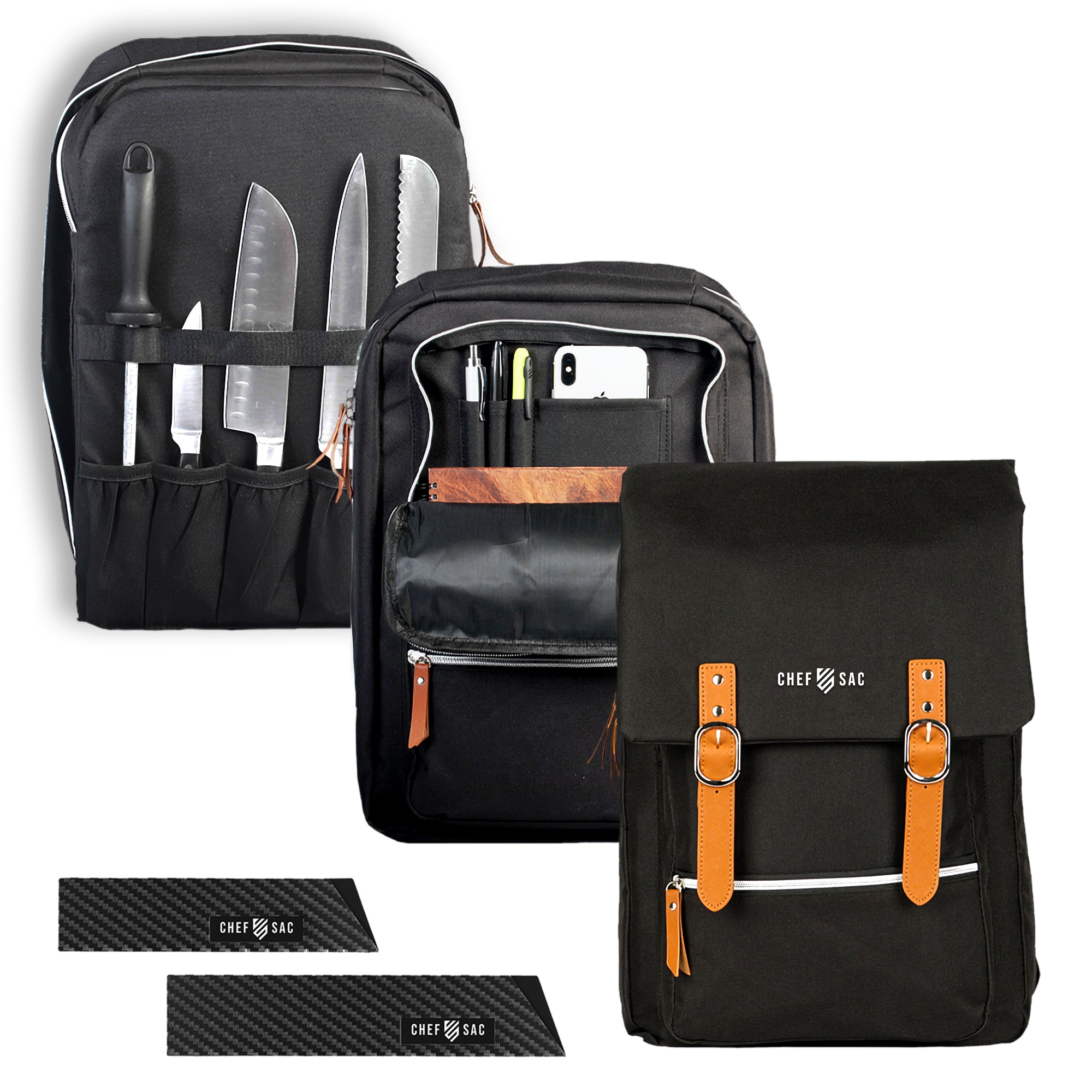
A chef knife backpack can be useful when you regularly transport knives, utensils, and other culinary equipment. Many designs include multiple compartments, dedicated knife storage, and space for personal or work essentials.
Chefs who need dedicated storage for knives and additional work essentials can explore the Premium Chef Knife Backpack to see whether its layout suits their gear.
Backpacks distribute weight across both shoulders and can be convenient for commuting or moving between work locations. However, comfort, durability, and blade protection depend on the specific design, construction, and how the bag is packed.
Before purchasing, check the knife-retention system, compartment dimensions, closures, carrying comfort, and care instructions. Never assume a backpack alone will prevent blade damage; knives must be secured in appropriate slots, guards, or sheaths.
If you need room for knives and other kitchen equipment, compare the available chef bags and backpacks to find a carrying style that fits your routine.
Sheaths

Knife sheaths and blade guards help cover a knife's edge during storage and transport. They come in materials such as plastic, leather, and metal, but the best option depends on the blade and how you intend to store it.
Choose a sheath or guard that fits the knife's length and width, covers the edge and tip, and stays securely in place. A loose guard can slip off, while an incorrectly sized one may not protect the blade properly.
Leather sheaths can be comfortable and durable, but leather can retain moisture. If a blade is stored in a damp leather sheath, moisture may contribute to corrosion. Clean and dry the knife thoroughly before storage, and follow the sheath manufacturer's care instructions.
Plastic guards are often convenient for everyday knife storage and transport. However, any guard or sheath can trap moisture if a knife is put away wet. Dry the blade before covering it, and inspect the guard regularly for cracks, loose fittings, or other damage.
For kitchen knives carried in a bag, a properly fitted blade guard can help protect both the edge and nearby items. Choose one designed for your knife rather than relying on a generic cover that may not fit securely.
For an additional layer of protection during transport, consider properly fitted knife guards designed for kitchen knives.
Cleaning Kits

Cleaning and care supplies help remove food residue, moisture, and other contaminants from your knives. A complicated kit isn't always necessary; consistent cleaning and drying are usually the most important steps.
After using a knife:
-
Follow the knife manufacturer's cleaning instructions.
-
Wash the blade carefully with suitable cleaning supplies.
-
Dry the blade thoroughly with a clean cloth.
-
Apply an appropriate protective oil if recommended for that knife, particularly for carbon-steel blades.
-
Store the knife in a dry, secure place.
Avoid leaving knives wet or soaking them for long periods. Unless the manufacturer specifically says otherwise, don't assume a knife is dishwasher-safe. Harsh detergents, heat, and contact with other items can damage the blade or handle.
Knife-care products vary. Oils and other protective treatments should be compatible with the blade material and intended use. For knives used to prepare food, use a product suitable for food-contact applications and follow its instructions.
Regular care can help reduce the risk of rust and corrosion and keep your knives in better condition. It cannot prevent every form of wear, so inspect blades and handles regularly for damage.
Frequently Asked Questions
What are the most important knife accessories?
Start with a suitable sharpening method, a safe way to store and transport your knives, and the supplies needed to clean and dry them. A honing rod may also be useful for maintaining an appropriate edge between sharpening sessions.
Is a whetstone better than an electric knife sharpener?
Neither is best for every person or knife. Whetstones offer control but require practice. Electric sharpeners can be convenient, but you need a model compatible with your blades and must follow its instructions.
Is a honing rod the same as a knife sharpener?
Not exactly. A traditional steel honing rod primarily helps realign an edge, while sharpening removes material to create a new edge. Ceramic and diamond-coated rods can also remove material, depending on their design.
Do I need a knife roll or a chef backpack?
Choose based on what you carry. A knife roll may work well for a small, dedicated set of knives. A chef backpack may be more useful when you also transport utensils, equipment, and personal essentials.
Are blade guards and sheaths necessary?
They are useful for covering knife edges during storage and transport. Choose a guard that fits securely, and always clean and dry the blade before covering it.
How should I clean and store my kitchen knives?
Follow the knife manufacturer's care instructions. Clean knives after use, dry them thoroughly, and store them in a dry location with appropriate blade protection. Use protective oil only when suitable for the blade material and intended use.
Key Takeaways
-
Choose knife accessories based on your knives, experience, budget, and work routine.
-
Use a suitable sharpener when a blade needs sharpening, and understand the different role of a honing rod.
-
Select a knife roll, messenger-style bag, or chef backpack according to the amount of gear you carry.
-
Use properly fitted blade guards or sheaths to protect edges during transport.
-
Clean and dry knives before storage, and follow the manufacturer's maintenance instructions.
-
Check accessories regularly for wear, damage, and secure closures.
The right accessories help you organize your tools, care for your knives, and carry your equipment more confidently. Start with the essentials you need most, then add other accessories as your workflow requires.
About the Author
Keith Chiu is the founder of Chef Sac, a chef gear brand built for culinary professionals, culinary students, line cooks, caterers, private chefs, and serious cooks who care about how they carry their tools.
Chef Sac was created to give chefs a better way to organize, protect, and transport the tools of their craft. From knife bags and chef backpacks to aprons, knife guards, and everyday chef carry gear, Chef Sac is built for real kitchen workflows and the Culinary Mavericks who show up prepared.

