

Updated: October 2, 2026
Originally published: June 10, 2020
TL;DR
Before disposing of a kitchen knife, determine whether it can be repaired, donated, or recycled. If disposal is necessary, protect the blade securely and follow your local waste authority's rules for sharp objects.
Quick Answer
The safest way to get rid of a kitchen knife is to first determine whether it can be repaired, donated, or recycled. If it truly needs to be discarded, securely cover the blade so it cannot cause an injury and check your local disposal requirements before putting it into any waste stream.
Never leave a loose knife where another person could accidentally grab the blade.
What Is the Safest Way to Dispose of a Kitchen Knife?
Safe knife disposal means preventing the blade from causing an injury during handling, transportation, sorting, recycling, or waste collection.
There is no single disposal method that applies everywhere. Local waste and recycling programs can have different requirements for kitchen knives and other sharp metal objects, so check your local waste authority or recycling facility before disposal.
If the knife is still usable, consider repairing or donating it before throwing it away.
Knife Disposal Checklist
Before getting rid of a kitchen knife:
- Decide whether the knife can still be repaired or sharpened
- Consider donating a usable knife
- Check whether your local recycling facility accepts kitchen knives
- Check your local waste authority's rules
- Never leave a knife blade exposed
- Cover and secure the blade before transportation
- Keep the sharp edge away from the outside of the protective material
- Make sure the wrapping cannot easily come loose
- Clearly communicate that the package contains a sharp object when required
- Keep wrapped knives away from children and other people while waiting for disposal
A knife that is being transported for repair, donation, recycling, or disposal should be treated as a sharp tool until it reaches its final destination.
Salvaging Your Knife
Can Your Knife Be Saved?
Before deciding to dispose of a knife, take a moment to determine whether it actually needs to go.
A dull knife is not necessarily a ruined knife. Depending on the condition of the blade, sharpening, honing, cleaning, or professional restoration may bring it back into usable condition.
Minor surface rust, a dull edge, or other relatively small problems may be repairable. However, significant cracks, severe deformation, structural damage, or a compromised handle can be reasons to stop using the knife and seek professional advice.

When Should You Consider Professional Knife Sharpening?
If you have a high-quality knife that you would prefer to keep, professional sharpening or restoration may be worth considering.
A professional can assess the condition of the blade and determine whether it can be safely restored instead of discarded.
For everyday maintenance, proper sharpening, honing, cleaning, and storage can also help extend the useful life of your knives. See our guide to knife sharpening and maintenance for additional information.
Donating Your Knife
Are Your Knives Still Usable?
If your knife is still functional but you simply want to replace it, donation may be an option.
A usable knife can potentially have a second life with another cook, culinary student, or household. However, always contact the donation center before bringing knives there.
Not every thrift store, charity, or donation center accepts sharp kitchen tools, and policies can vary.
How Should You Prepare a Knife for Donation?
Before donating a knife:
- Clean and dry the knife thoroughly.
- Check that the knife is still safe and functional.
- Sharpen it only if appropriate and you are comfortable doing so.
- Protect the entire blade before transporting it.
- Contact the donation center to confirm that knives are accepted.
- Follow the center's instructions for drop-off.

How Do You Wrap a Knife for Donation?
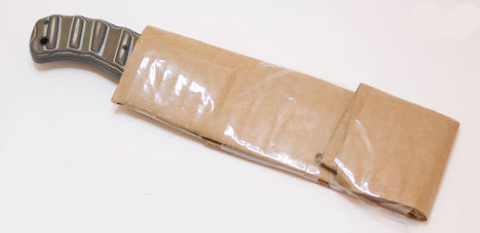
A protective cardboard sleeve can help keep the blade contained during transportation.
Use a piece of sturdy cardboard that is longer and wider than the blade.
Fold the cardboard around the blade so that the sharp edge is completely enclosed. Secure the cardboard with tape, making sure the tape is securing the cardboard rather than being applied directly to the blade.
The goal is to create a secure protective covering that prevents the blade from being exposed while the knife is being transported.
Recycling Your Knife
Is the Metal Reusable?
A knife that can no longer be safely used may still contain recyclable metal.
However, do not assume that every recycling program accepts kitchen knives. Contact your local recycling facility first and ask whether they accept knives or other sharp metal kitchen tools.
If they do, follow their instructions for preparing the knife.
How Should You Prepare a Knife for Recycling?
The main priority is preventing the blade from causing an injury to you, transport workers, or recycling staff.
Before taking the knife to a recycling facility:
- Confirm that the facility accepts kitchen knives.
- Cover the entire blade with sturdy protective material.
- Secure the covering so it cannot easily come loose.
- Keep the sharp edge completely enclosed.
- Transport the knife according to the facility's instructions.
Do not rely on a thin layer of paper alone if it does not adequately protect the blade.
The recycling facility may have its own packaging requirements, so follow those instructions when they differ from general guidance.

Disposing of Your Knife
Is It the End of the Line for Your Knife?
If the knife cannot be repaired, donated, or accepted for recycling, you may need to dispose of it.
This is the point where checking local requirements becomes especially important.
Different communities can have different rules for sharp metal objects and household waste. Do not assume that a kitchen knife belongs in your regular household trash.
Contact your local waste authority or check its official disposal guidance before putting a knife into any waste container.
How Should You Prepare a Knife for Disposal?
If your local authority permits knives to be placed in household waste, follow its specific instructions.
As a general safety measure:
- Cover the entire blade with sturdy material.
- Make sure the covering is securely fastened.
- Use a rigid container or other approved method if required by local guidance.
- Make sure the blade cannot puncture through the protective covering.
- Keep the wrapped knife away from children and other people before disposal.
- Follow any labeling instructions provided by your local waste authority.
Do not place an exposed knife directly into a garbage bag.
If your local authority provides a designated collection point or special procedure for sharp metal objects, use that method instead.

What Should You Do Before Getting Rid of a Kitchen Knife?
The simplest way to approach knife disposal is to work through the options in order:
| Option | When to consider it | What to do |
|---|---|---|
| Repair | Knife is still structurally sound | Sharpen, hone, clean, or seek professional restoration |
| Donate | Knife is safe and usable | Contact the organization and confirm it accepts knives |
| Recycle | Knife is no longer useful but recyclable | Confirm acceptance with the recycling facility |
| Dispose | Other options are unavailable | Follow your local waste authority's instructions |
This approach can prevent a usable knife from being thrown away unnecessarily while making the final disposal step safer.
Practical Knife Disposal Guide
Whether you are a professional chef replacing an old knife set or a home cook clearing out a kitchen drawer, the same basic principle applies: never treat a loose kitchen knife like ordinary waste.
Keep the blade contained until you know exactly where the knife is going.
If you are donating or recycling several knives, prepare them together and keep the wrapped knives in a secure location until transportation.
For chefs who regularly carry knives between kitchens, culinary school, catering jobs, or other locations, safe storage is also important before a knife reaches the end of its useful life. Dedicated knife guards can help keep individual blades separated and protected during storage and transport.
Once you have safely dealt with your old knives, proper storage can help your replacement knives last longer. A dedicated chef knife backpack can keep knives and other culinary equipment organized when moving between kitchens.
FAQ
Can I throw a kitchen knife in the trash?
It depends on your local waste rules. Never place a loose knife directly into household trash. Check your local waste authority's instructions and follow its requirements for preparing sharp objects.
Can kitchen knives be recycled?
Some recycling facilities accept kitchen knives as scrap metal, while others do not. Contact the facility before taking knives there and follow its preparation instructions.
Can I donate old kitchen knives?
You may be able to donate usable kitchen knives, but donation centers have different policies. Contact the organization first to confirm that it accepts knives.
Should I sharpen a knife before donating it?
If the knife is usable, cleaning it and ensuring it is in reasonable condition can make it more suitable for donation. Sharpening is optional and should only be done if appropriate and safe.
How should I wrap a knife before transporting it?
The blade should be completely enclosed in sturdy protective material and secured so it cannot come loose or become exposed. Follow the receiving organization's or disposal facility's specific instructions whenever available.
What should I do with a broken kitchen knife?
Stop using it and determine whether professional repair, recycling, or disposal is appropriate. If it cannot be safely repaired or accepted for recycling, follow your local waste authority's instructions for sharp objects.
Can I put a knife in a garbage bag?
Do not place a loose knife directly into a garbage bag. If local rules permit household disposal, follow the required method for enclosing and securing the blade.
Key Takeaways
- A dull knife is not automatically a knife that needs to be thrown away.
- Consider repair, donation, or recycling before disposal.
- Always contact donation centers and recycling facilities before bringing them knives.
- Never transport or discard a kitchen knife with an exposed blade.
- Securely cover the blade before transportation or disposal.
- Local waste rules can differ, so verify the requirements where you live.
- Keep knives and other sharp tools away from children and anyone who could accidentally handle them.
- Safe handling matters from the moment you decide to replace a knife until the knife reaches its final destination.
About the Author
Keith Chiu is the founder of Chef Sac, a chef gear brand built for culinary professionals, culinary students, line cooks, caterers, private chefs, and serious cooks who care about how they carry their tools.
Chef Sac was created to give chefs a better way to organize, protect, and transport the tools of their craft. From knife bags and chef backpacks to aprons, knife guards, and everyday chef carry gear, Chef Sac is built for real kitchen workflows and the Culinary Mavericks who show up prepared.

