
Originally published: March 31, 2023
Updated: October 23, 2026
TL;DR
Organizing knives in a knife roll starts with matching each knife to a suitable pocket, protecting the blade, and keeping accessories separate. Store knives securely, keep the same arrangement between uses, and check that everything is fastened before transporting your roll.
Quick Answer: How Do You Organize Knives in a Knife Roll?
To organize knives in a knife roll, clean and dry each knife, place it in a suitable pocket with the blade fully covered, arrange knives by size or use, and store accessories separately. Secure the roll before carrying it, and check that no blade can slide out during transport.
Knife Roll Organization Checklist
Before packing your knife roll, check the following:
-
Clean and dry every knife.
-
Use the correct pocket or slot for each blade.
-
Make sure each blade is fully covered and securely held.
-
Arrange knives by size, type, or frequency of use.
-
Keep accessories in separate compartments.
-
Close all straps, flaps, buckles, or zippers.
-
Check the roll for loose tools before transporting it.
A consistent packing routine helps protect your knives and makes it easier to find the right tool when you arrive at work.
What Is a Knife Roll?
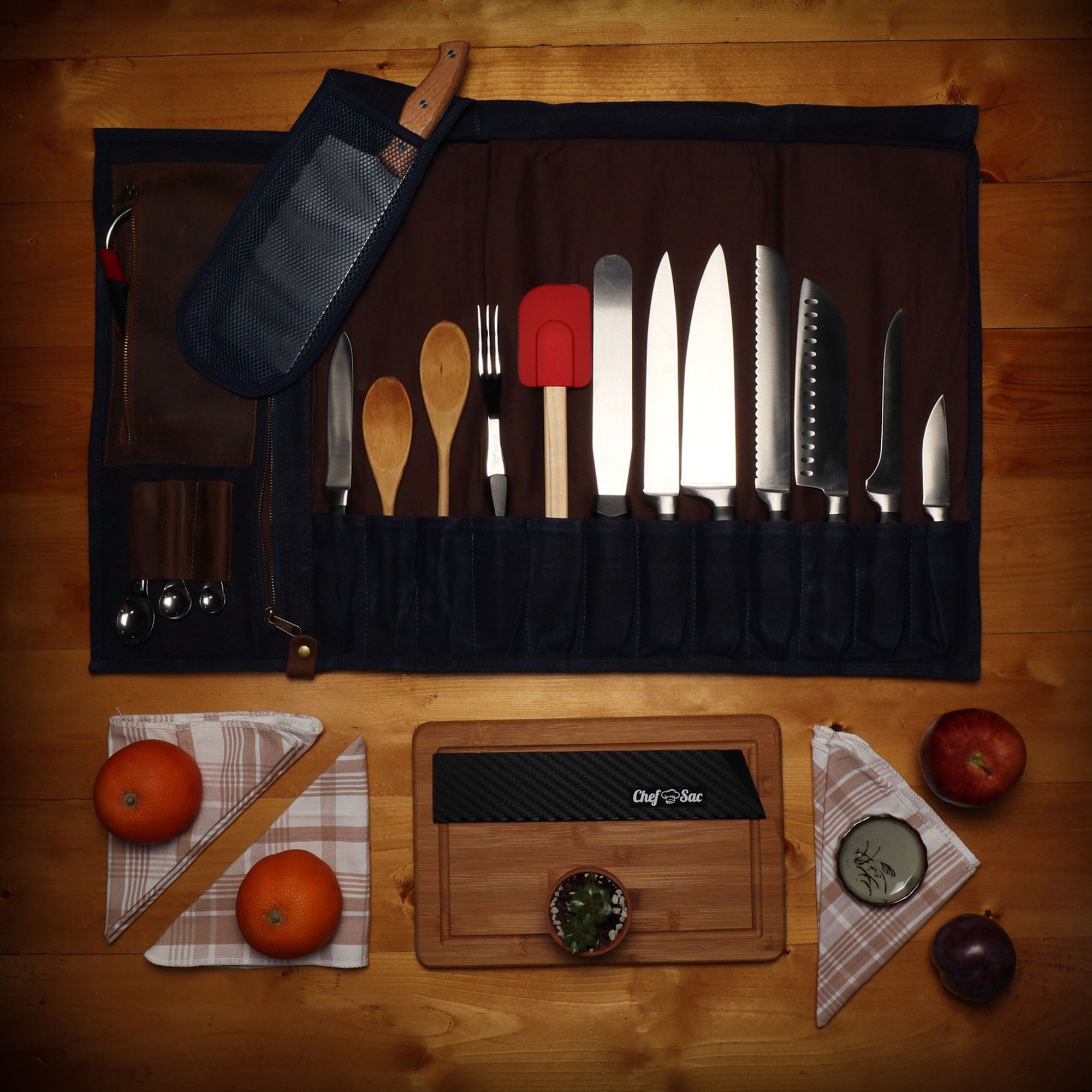
A knife roll is a portable storage case with pockets or slots designed to hold kitchen knives. Most designs fold or roll closed to keep the knives together during transport. Some also include compartments for accessories such as thermometers, sharpening tools, scissors, and other small kitchen equipment.
For professional chefs, culinary students, line cooks, and private chefs, a knife roll offers a dedicated way to organize personal knives and transport them between kitchens, school, catering events, and other work locations.

Benefits of Using a Knife Roll
Using a knife roll can make it easier to protect, organize, and transport your knives.
Keeps Your Knives Protected
A knife roll separates blades into individual pockets, reducing unnecessary contact between knives and other equipment. Properly fitted pockets also help prevent blades from moving around during transport.
Always make sure each blade is fully covered and secured before closing the roll.
Makes Knives Easier to Transport
A knife roll keeps your knives together in one compact package. Instead of carrying loose knives or placing them directly into a general-purpose bag, you can pack them in a dedicated organizer.
For chefs who carry more equipment, chef backpacks offer another way to transport culinary tools and everyday work essentials.
Makes Tools Easier to Find
Giving each knife a consistent pocket makes it easier to locate the right tool during preparation. You can arrange knives by type, size, or how frequently you use them.
Once you establish a layout, return each knife to its assigned pocket after cleaning. This makes it easier to notice when a tool is missing before leaving the kitchen.
Tips for Organizing Your Knives in a Knife Roll

Organizing your knives correctly helps keep your equipment orderly and ready for work. Use these practical tips to build a system that suits your knife collection.
Label Each Pocket
If your knife roll has many similar-sized pockets, labels can help you remember where each knife belongs. You can also establish a consistent arrangement without physically labeling the roll.
For example, keep your chef’s knife in one designated pocket, your paring knife in another, and specialty knives in their own slots. Choose a layout that makes sense for the tools you use most often.
Place Knives in Suitable Pockets
Match each knife to a pocket that fits its blade and handle. Avoid forcing a large knife into a narrow slot or placing a blade where its tip can protrude through the fabric.
Do not rely on pocket position alone to protect a blade. If the roll does not fully cover or securely hold a knife, use a suitable blade guard or choose a better-fitting storage option.
Arrange Knives by Size or Use
A consistent arrangement makes your knife roll easier to pack and unpack.
You might organize knives from smaller to larger, group them by task, or place frequently used knives in the most convenient positions. The best system is the one you can repeat reliably.
Make sure every knife remains securely held regardless of where it sits in the roll.
Store Accessories Separately
Use dedicated compartments for accessories such as thermometers, sharpening tools, pens, or other small equipment. Keeping accessories away from exposed blade edges helps prevent scratches, tangling, and unnecessary contact between items.
If your roll does not have separate accessory pockets, carry those items in another compartment of your chef bag rather than squeezing them between knives.
Secure the Roll Before Carrying It
Before transporting your knife roll, check that all knives are seated correctly and that the closure is fastened. Keep the roll closed while moving between locations, and avoid carrying it if a blade can slide out or poke through the material.
Clean and dry your knives before packing them. Moisture trapped inside a closed roll can contribute to corrosion or damage, depending on the blade and handle materials.
Practical Knife Roll Packing Routine
A simple routine can make organizing your knives easier before and after every shift.
-
Prepare your knives. Clean and dry each knife before packing it.
-
Check the pockets. Make sure the slots are suitable for the blades you intend to carry.
-
Pack by a consistent layout. Place each knife in its usual pocket, with the blade fully covered.
-
Separate accessories. Keep sharpening tools and other small equipment away from blade edges.
-
Secure the roll. Fasten all closures and check for loose or protruding items.
-
Inspect before leaving. Confirm that the roll is closed and your equipment is ready for transport.
-
Unpack carefully. When you arrive, open the roll on a stable surface and remove knives by their handles.
If you carry more than knives, consider how your knife roll fits into your overall chef gear setup. A dedicated roll can keep blades organized, while a larger chef bag can hold additional tools and personal essentials.
FAQ
How should knives be arranged in a knife roll?
Arrange knives by size, type, or frequency of use. Place each knife in a suitable pocket, ensure the blade is fully covered, and keep the same arrangement between uses.
Should large knives go at the bottom of a knife roll?
Follow the layout and closure design of your specific roll. The priority is to place each knife in a pocket that fits it securely and prevents the blade from protruding or moving during transport.
Should knives be clean before going into a knife roll?
Yes. Clean and dry knives before packing them. Storing knives while wet can contribute to corrosion or damage, depending on the blade and handle materials.
Can you store sharpening tools and accessories in a knife roll?
Yes, if the roll has suitable separate compartments. Keep accessories away from blade edges so they do not scratch knives or interfere with secure storage.
How do you keep knives from moving inside a knife roll?
Use pockets that fit the knives properly, secure the roll's closures, and use appropriate blade guards when needed. Do not transport a knife if it can slide out or expose its edge.
Is a knife roll better than a chef backpack?
It depends on how much equipment you carry. A knife roll is compact and focuses on knife storage, while a chef backpack can provide more room for knives, accessories, and other work essentials.
Key Takeaways
-
Clean and dry knives before storing them.
-
Match every knife to a suitable pocket.
-
Arrange knives by size, type, or frequency of use.
-
Keep accessories separate from blade edges.
-
Secure all closures before transporting the roll.
-
Use blade guards when needed and never carry a knife that is not securely covered.
-
Maintain a consistent packing routine so your equipment is easier to find and check.
A well-organized knife roll helps you transport your tools with greater confidence and arrive ready for the work ahead.
About the Author
Keith Chiu is the founder of Chef Sac, a chef gear brand built for culinary professionals, culinary students, line cooks, caterers, private chefs, and serious cooks who care about how they carry their tools.
Chef Sac was created to give chefs a better way to organize, protect, and transport the tools of their craft. From knife bags and chef backpacks to aprons, knife guards, and everyday chef carry gear, Chef Sac is built for real kitchen workflows and the Culinary Mavericks who show up prepared.


