

Updated: September 30, 2026
Originally published: June 10, 2020
TL;DR
Proper knife maintenance comes down to four habits: sharpen when the edge is dull, hone regularly between sharpening sessions, store knives safely, and hand wash and dry them after use. Good maintenance helps protect the blade, improve cutting performance, and extend the useful life of your kitchen knives.
Quick Answer
How do you maintain a chef knife?
Sharpen the blade when it becomes dull, hone the edge between sharpening sessions, store the knife so the edge is protected, and hand wash and dry it after every use. Avoid the dishwasher, prolonged soaking, and loose storage where blades can contact other objects.
Knife Sharpening and Maintenance Checklist
- Sharpen your knife when the edge becomes dull.
- Use a sharpening method appropriate for your knife and your skill level.
- Hone the knife between sharpening sessions when needed.
- Avoid excessive pressure when sharpening or honing.
- Store knives where the blade will not contact other knives or hard surfaces.
- Hand wash kitchen knives instead of putting them in the dishwasher.
- Dry the blade and handle completely before storage.
- Use knife guards or appropriate storage when transporting or storing individual knives.
- Inspect knives regularly for damage, loose handles, chips, or other problems.
For chefs who regularly carry their knives between kitchens, culinary school, catering jobs, or workstations, proper storage is just as important as sharpening and cleaning. A chef knife backpack can keep knives and other essential tools organized and protected while they are being transported.
Properly Sharpening and Honing Your Knife
Knowing how to sharpen and hone your knives is an important part of kitchen knife maintenance. A dull knife can require more force and make controlled cutting more difficult, so keeping the edge maintained is part of good kitchen practice.
Sharpening and honing are not the same thing. Sharpening removes material from the blade to create a new edge, while honing is primarily used to realign and maintain an existing edge.
How often you need to sharpen depends on the knife, steel, cutting surface, workload, and sharpening method. Instead of following a fixed calendar, pay attention to how the knife performs. If it no longer cuts cleanly and safely despite regular honing, it may be time to sharpen it.
If you are not comfortable sharpening your own knives, a professional knife-sharpening service is another option.

1. Using a Whetstone
A whetstone is a traditional way to sharpen a kitchen knife and gives you a high level of control over the sharpening process.
Whetstones are available in different grits. Coarser grits are generally used when more material needs to be removed, while finer grits can be used to refine the edge.
Before using a whetstone, follow the manufacturer's instructions. Some stones need to be soaked or otherwise prepared before sharpening, while others are designed to be used differently.
You will also need a stable surface or stone holder to keep the whetstone from moving.
How to sharpen a knife with a whetstone
- Secure the whetstone on a stable surface.
- Prepare the stone according to the manufacturer's instructions.
- Hold the knife at the appropriate angle for the blade.
- Move the blade across the stone using controlled, consistent strokes.
- Work both sides of the blade evenly.
- If using multiple grits, progress from the coarser stone to the finer stone as appropriate.
- Use lighter pressure toward the end of the process.
- Carefully remove any remaining burr.
- Clean and dry the knife before storing it.
The correct sharpening angle depends on the knife. Rather than assuming every kitchen knife should be sharpened at exactly the same angle, follow the manufacturer's guidance when available.
A whetstone can produce excellent results, but technique matters. If you are new to sharpening, practice carefully and avoid rushing the process.

2. Using an Electric Sharpener
Electric sharpeners can make knife sharpening faster and easier, particularly for people who are not comfortable using a whetstone.
Many electric sharpeners use different stages for coarse and fine sharpening. Always follow the manufacturer's instructions for your particular sharpener and knife.
Electric sharpeners can remove material quickly, so using the correct setting and avoiding unnecessary passes is important.
An electric sharpener can be convenient, but it should not be treated as a universal solution for every knife. Some specialty knives or blades may require a different sharpening method.
If you have an expensive or specialty chef knife and are unsure whether an electric sharpener is appropriate, check the knife manufacturer's recommendations or use a professional sharpening service.

3. Using a Honing Rod
Honing is different from sharpening.
A honing rod is commonly used between sharpening sessions to help maintain the alignment of an existing knife edge. It does not replace sharpening when a knife has become genuinely dull.
How often you need to hone depends on how frequently you use the knife and how the edge responds to your cutting work.
How to use a honing rod
- Place the honing rod securely on a stable surface or hold it according to the manufacturer's instructions.
- Position the knife against the rod at the appropriate angle.
- Use controlled strokes from the heel of the blade toward the tip.
- Repeat on the opposite side.
- Avoid excessive pressure.
- Wipe the blade clean after honing if necessary.
The exact angle varies by knife, so check the manufacturer's recommendations when possible.
The goal is controlled maintenance, not aggressively removing metal from the blade.

4. Using a Leather Strop
A leather strop can be used as a finishing step after sharpening or as part of edge maintenance.
Stropping is designed to refine and align the edge and can help remove very small remnants of a burr left after sharpening.
Leather strops may use smooth or suede surfaces, and some are used with polishing compounds. The appropriate setup depends on the knife and the result you are trying to achieve.
If you are new to stropping, start carefully. A leather strop is a finishing tool, so excessive pressure or an inconsistent technique can affect the edge rather than improve it.
The important thing is to use a stropping method that is appropriate for your knife and sharpening system.
Properly Storing Your Knives
Sharpening and honing your knives is only part of maintaining them. How you store your knives also matters.
A knife should be stored so that the cutting edge does not repeatedly contact other knives, loose utensils, hard surfaces, or other objects that can damage the edge.
Three common storage options are:
- On the wall
- On the counter
- In a drawer
The right option depends on your kitchen layout, available space, knife collection, and whether the knives need to be transported.
If you regularly move your knives between kitchens, dedicated knife guards can add another layer of protection by keeping individual blades separated during storage and transport.

1. Using a Magnetic Strip
A magnetic wall strip can keep knives accessible while making it easy to see the blades you have available.
When using a magnetic strip, choose one designed to securely hold the knives you intend to store. Avoid allowing the sharp edge to slam directly against the magnetic surface.
When placing or removing a knife, use controlled movement and avoid dragging the cutting edge across the strip.
A magnetic strip can work particularly well in professional or home kitchens where counter space is limited.

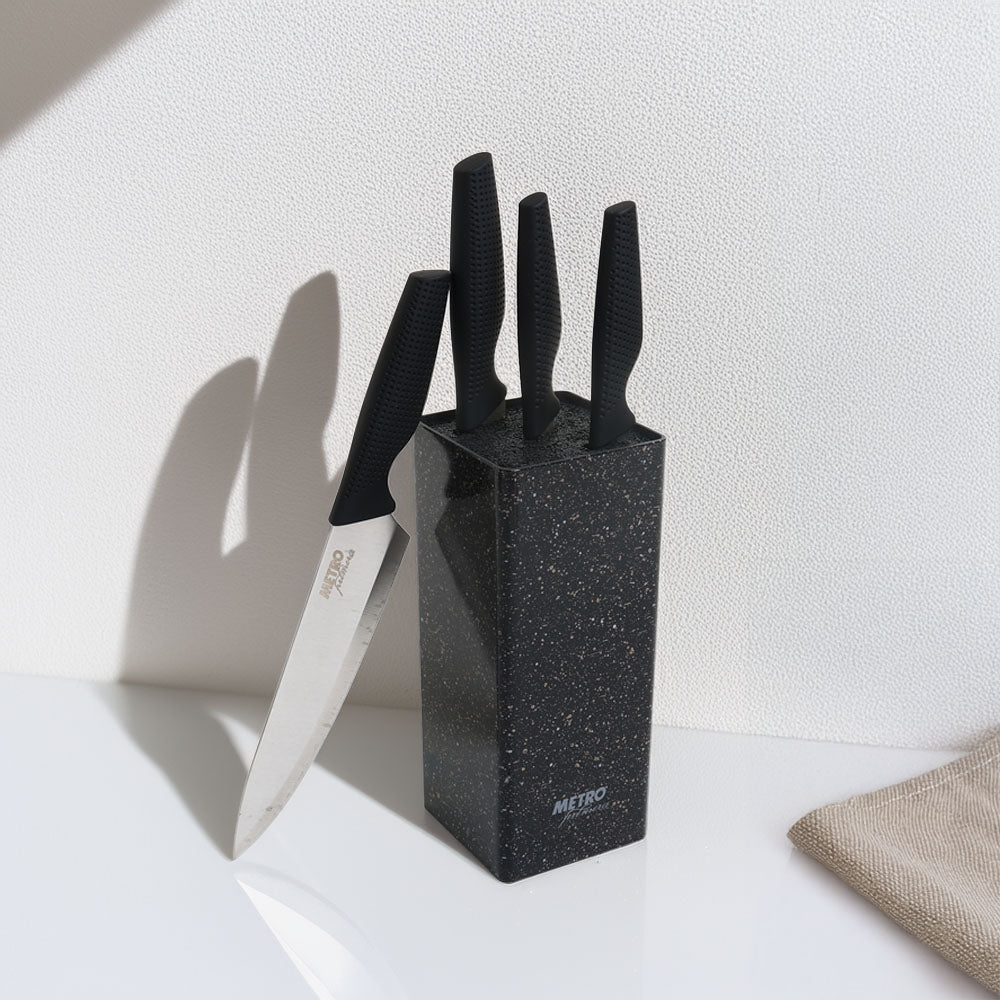
2. Using a Knife Block
A knife block is another convenient option for keeping knives organized and accessible on the counter.
When selecting a knife block, consider the size and shape of the knives you actually use. A block with limited slot sizes may not work well if your collection contains knives with different blade widths or shapes.
When inserting or removing a knife, control the blade rather than forcing it into a slot. The storage system should protect the knife edge rather than repeatedly scraping against it.
For chefs who use a variety of knives, a flexible storage system can be more practical than a block designed around one fixed knife set.
3. Using In-Drawer Storage
If you do not have room for a magnetic strip or countertop knife block, in-drawer storage can keep knives organized while keeping the countertop clear.
Never leave loose knives scattered inside a drawer. Blades can contact one another, become damaged, or create a safety hazard when someone reaches into the drawer.
Instead, use an in-drawer knife organizer or another storage solution designed to keep each knife separated and secure.
Choose a system that accommodates the sizes and shapes of the knives you actually own.
For chefs who transport knives between kitchens, catering jobs, culinary school, or other work locations, dedicated knife storage is especially important. A knife should remain protected and organized while it is being carried, not just while it is sitting in the kitchen.
Properly Cleaning Your Knives

Cleaning your knives after every use is one of the simplest ways to maintain them.
For most kitchen knives, hand washing with warm water, dish soap, and a soft sponge is the preferred approach. Avoid leaving knives submerged in water for extended periods.
You should also avoid putting knives in the dishwasher unless the knife manufacturer specifically states that the knife is dishwasher-safe. Even when a knife can technically withstand the dishwasher, the heat, detergent, moisture, and contact with other items may affect the blade, handle, or finish over time.
How to clean a chef knife
- Wash the knife by hand with warm soapy water.
- Use a soft sponge rather than an abrasive material.
- Carefully clean both sides of the blade and the handle.
- Rinse away soap.
- Dry the blade and handle completely.
- Store the knife safely once it is dry.
Never leave a wet knife sitting in a sink or allow moisture to remain on the blade during storage.
Practical Knife Care for Chefs and Cooks
For chefs, line cooks, culinary students, caterers, and other cooks who use knives regularly, maintenance works best as part of the normal kitchen routine.
Before service, check that your knives are clean, sharp enough for the work ahead, and free from obvious damage.
During prep, use an appropriate cutting board and avoid using your knife on surfaces that can damage the edge.
After service, clean and dry the knives before putting them away.
If you transport your knives between kitchens, keep each blade protected and organized rather than placing loose knives into a bag, drawer, or container.
If you transport several knives and other kitchen tools regularly, a chef knife bag gives you a dedicated way to keep your equipment organized while moving between kitchens and jobs.
The goal is simple: maintain the edge, protect the blade, clean the knife, and store it safely.
Frequently Asked Questions About Knife Maintenance
How often should I sharpen my chef knife?
There is no single schedule that works for every knife. Sharpen when the knife no longer performs well after normal honing and maintenance. How often this happens depends on how frequently the knife is used, the knife's steel and edge geometry, the cutting surface, and the sharpening method.
Is honing the same as sharpening?
No. Sharpening creates a new cutting edge by removing material from the blade. Honing primarily helps maintain or realign an existing edge. A knife may need both as part of regular maintenance.
Can I put my chef knife in the dishwasher?
Hand washing is generally the safer choice for maintaining kitchen knives. Dishwashers expose knives to heat, detergent, moisture, and contact with other items, which can affect the blade and handle.
Should I use a whetstone or electric sharpener?
Both can sharpen a knife when used correctly. A whetstone provides greater manual control, while an electric sharpener can be faster and easier to use. The appropriate choice depends on the knife, sharpening system, and user's experience.
How should I store my chef knives?
Store knives in a way that protects the cutting edge and keeps the blades organized. Magnetic strips, knife blocks, and dedicated in-drawer organizers are common options. For knives that travel, use protective storage designed for transportation.
Can a knife guard help protect a knife?
Yes. A properly fitted knife guard can help protect the blade from contact with other tools during storage or transportation. This is particularly useful when knives are carried outside the kitchen.
Key Takeaways
Good knife maintenance does not have to be complicated.
- Sharpen when your knife becomes dull.
- Hone between sharpening sessions when appropriate.
- Use the correct sharpening method for your knife.
- Avoid unnecessary pressure when sharpening or honing.
- Store knives so the cutting edge is protected.
- Keep loose knives out of drawers and bags.
- Hand wash and thoroughly dry knives after use.
- Protect knives when transporting them between kitchens.
- Replace or professionally inspect knives that have significant damage.
A well-maintained knife is easier to work with, easier to control, and better prepared for the demands of a busy kitchen.
About the Author
Keith Chiu is the founder of Chef Sac, a chef gear brand built for culinary professionals, culinary students, line cooks, caterers, private chefs, and serious cooks who care about how they carry their tools.
Chef Sac was created to give chefs a better way to organize, protect, and transport the tools of their craft. From knife bags and chef backpacks to aprons, knife guards, and everyday chef carry gear, Chef Sac is built for real kitchen workflows and the Culinary Mavericks who show up prepared.


Thanks for this great guide! I find the knife block aesthetically pleasing and organized in the kitchen. I’m thinking of availing of a knife sharpening service from the professionals in this store whose site is https://knifesharpeninglosangeles.com/. Does using magnetic strips safe for an owner with pets or children? They might be clumsy and get hurt because the knives are exposed.