

Updated: October 20, 2026
Originally published: June 3, 2020
TL;DR
A spatula can refer to several different kitchen tools, including silicone spatulas, metal turners, offset spatulas, and bench scrapers. Each type serves a different purpose, from scraping mixing bowls and flipping food to spreading frosting and handling delicate ingredients. Choosing the right spatula depends on what you cook, the cookware you use, and the task you need to complete.
Quick Answer: What Is a Spatula Used For?
A spatula is a kitchen utensil used to lift, turn, spread, scrape, fold, or transfer food. Silicone spatulas are useful for scraping bowls and folding mixtures, metal turners help flip foods on a cooking surface, offset spatulas are useful for frosting and plating, and bench scrapers help portion dough and move chopped ingredients.
What Is a Spatula?
In any kitchen, the word spatula can take on many different meanings. This is because it can actually refer to many different kitchen tools you may find yourself using in the kitchen.
Although these tools share a broad name, their shapes, materials, and intended uses can differ considerably. Some spatulas have flexible heads designed to scrape the sides of a bowl, while others have broad, firm blades for turning food in a pan. Some are made for pastry work, and others are designed for grilling.
Understanding these differences can help you choose the right tool for the job instead of reaching for whichever spatula happens to be closest.
Types of Spatulas and Their Uses
1. Silicone or Rubber Spatula

A silicone spatula is especially useful for mixing, folding, and scraping ingredients. Its flexible head can follow the curves of mixing bowls, helping you gather batter, frosting, sauces, and other mixtures without leaving as much behind.
Common uses include:
-
Scraping batter or dough from mixing bowls
-
Folding whipped egg whites into a mixture
-
Mixing sauces and fillings
-
Scraping ingredients from containers
-
Spreading soft mixtures in baking pans
Silicone spatulas are a versatile choice for baking and general food preparation. Check the manufacturer's temperature rating before using one over heat, and avoid using a damaged or deteriorating utensil.
2. Metal Spatula or Turner
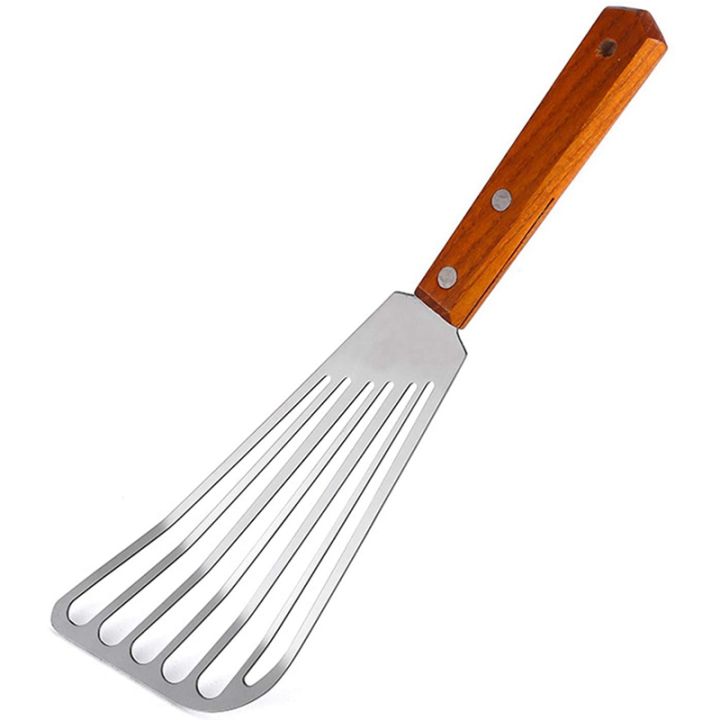
A metal spatula, often called a turner, typically has a flat, relatively firm blade. It is designed to slide under food so you can lift, turn, or transfer it.
Common uses include:
-
Flipping burgers and pancakes
-
Turning fish fillets or other pan-cooked foods
-
Lifting cookies or pastries from suitable baking trays
-
Transferring cooked food from a pan to a plate
-
Handling foods that need support while being turned
A thin, flexible blade can help with delicate foods, while a sturdier turner may work better for heavier items. Use metal turners only with cookware that can tolerate them; they can scratch nonstick coatings.
3. Offset Spatula

An offset spatula has a narrow blade that sits slightly below its handle. This design provides clearance for spreading and lifting without your hand getting directly in the way.
Offset spatulas are particularly useful for:
-
Spreading frosting over cakes
-
Smoothing icing and fillings
-
Applying an even layer of cream or sauce
-
Handling delicate pastry components
-
Positioning small garnishes during plating
Pastry chefs often keep an offset spatula close at hand because it offers control when working with soft mixtures and delicate finishes.
4. Bench Scraper

A bench scraper usually has a broad, flat metal blade and a handle along one edge. Although it is not always grouped with conventional spatulas, it performs several similar kitchen tasks.
Common uses include:
-
Portioning and dividing dough
-
Gathering chopped herbs and vegetables
-
Moving ingredients from a cutting board to a bowl
-
Scraping dough or residue from a suitable work surface
-
Helping keep a preparation station organized
A bench scraper is especially useful for bakers and cooks who regularly handle dough or prepare large quantities of ingredients. Keep the blade away from your hands when gathering or transferring food.
5. Grilling Spatula

A grilling spatula generally has a long handle and a broad, sturdy blade. The extra reach can help you turn food on a grill while keeping your hands farther from the heat.
It can be used for:
-
Turning burgers and larger pieces of food
-
Lifting fish fillets carefully
-
Flipping vegetables and other grilled foods
-
Transferring cooked food from a grill
-
Handling food that needs support during turning
Choose a grilling spatula that suits the size of your grill and the foods you prepare. A longer handle can improve reach, but always use appropriate heat protection and avoid leaning over hot surfaces.
How to Choose the Right Spatula
Before buying a spatula, consider the tasks you perform most often.
-
Purpose: Decide whether you mainly need to scrape bowls, flip food, spread frosting, or work at a grill.
-
Material: Silicone offers flexibility for many mixing tasks; metal provides firmness for lifting and turning; other materials may suit specific cookware or applications.
-
Blade shape: A broad blade can support larger foods, while a narrow or offset blade provides greater control for detailed work.
-
Handle length: Short handles are convenient for bowl work, while longer handles can provide more reach near heat.
-
Cookware compatibility: Check whether the spatula is suitable for your pans, especially if you use nonstick cookware.
-
Cleaning and storage: Choose a design that is easy to clean and can be stored securely with your other kitchen tools.
Spatula Comparison: Which Type Do You Need?
| Type | Best For | Main Advantage |
|---|---|---|
| Silicone spatula | Mixing, folding, scraping | Flexible head reaches bowl edges |
| Metal turner | Flipping and lifting food | Firm blade supports food |
| Offset spatula | Frosting, pastry, plating | Better clearance and control |
| Bench scraper | Dough, chopped ingredients, cleanup | Broad, straight edge |
| Grilling spatula | Turning food on a grill | Long handle and sturdy blade |
You do not necessarily need every type. Start with the spatula that suits your regular cooking tasks, then add specialized tools as your work requires them. You can also browse Chef Sac kitchen gear for equipment and accessories suited to working chefs.
How to Care for Your Spatulas
Good care helps keep kitchen utensils clean and ready for use.
-
Clean each spatula after use according to its manufacturer's instructions.
-
Remove food residue from the blade, handle, and any joints.
-
Dry utensils thoroughly when required, particularly those made from metal or with wooden handles.
-
Inspect silicone heads for tears and metal blades for damage or loose handles.
-
Store sharp-edged tools safely to prevent injuries and protect nearby equipment. For kitchen knives, knife guards can help cover the blades during storage and transport.
-
Keep utensils used for raw foods clean and separate from those used for ready-to-eat foods when necessary.
Replace spatulas that are cracked, badly worn, shedding material, or otherwise difficult to clean properly.
Frequently Asked Questions
Are all spatulas the same?
No. The term covers several different tools. A flexible silicone spatula is suited to scraping and folding, while a metal turner is designed to lift and flip food. Offset spatulas and bench scrapers serve more specialized purposes.
Can I use a metal spatula on a nonstick pan?
It is generally better to use a spatula specifically approved for nonstick cookware, such as a suitable silicone utensil. Metal blades can scratch or damage many nonstick coatings.
What is the difference between a spatula and a turner?
In everyday kitchen language, the names sometimes overlap. A turner usually refers to a flat utensil designed to slide under and flip food, while spatula can also describe flexible tools used for mixing, scraping, and spreading.
Which spatula is best for baking?
A silicone spatula is useful for mixing and scraping bowls, while an offset spatula is helpful for frosting and decorating cakes. A bench scraper is valuable for portioning dough and moving ingredients.
Do professional chefs need more than one spatula?
It depends on the station and the type of cooking. A pastry chef may benefit from silicone and offset spatulas, while a line cook may prioritize a turner that suits the cookware and food being prepared.
Key Takeaways
-
Spatula is a broad term for several different kitchen tools.
-
Silicone spatulas work well for scraping, mixing, and folding.
-
Metal turners help lift and flip foods.
-
Offset spatulas provide control for frosting, pastry, and plating.
-
Bench scrapers are useful for dough, chopped ingredients, and work-surface cleanup.
-
Choose tools based on your cooking tasks, cookware, and storage needs, and explore chef gear and accessories to help organize the tools you bring to work.
-
Clean and inspect your spatulas regularly, and replace damaged utensils.
The best spatula is the one suited to the job you do most often. Understanding the differences can help you build a more useful, organized kitchen toolkit.
About the Author
Keith Chiu is the founder of Chef Sac, a chef gear brand built for culinary professionals, culinary students, line cooks, caterers, private chefs, and serious cooks who care about how they carry their tools.
Chef Sac was created to give chefs a better way to organize, protect, and transport the tools of their craft. From knife bags and chef backpacks to aprons, knife guards, and everyday chef carry gear, Chef Sac is built for real kitchen workflows and the Culinary Mavericks who show up prepared.
