
Updated: October 14, 2026
Originally published: June 4, 2020
TL;DR
A meat cleaver is a large, sturdy kitchen knife designed for heavy-duty cutting tasks. Depending on its design, it can help break down meat, separate smaller bones, chop dense vegetables, and process large ingredients more efficiently. Choosing the right cleaver, using it safely, and maintaining its edge will help you get the most from this versatile kitchen tool.
Quick Answer: What Are the Benefits of a Meat Cleaver?
The main benefits of a meat cleaver are its substantial blade, sturdy construction, and ability to handle certain tasks that are difficult with smaller kitchen knives.
A meat cleaver can help you:
-
Break down large cuts of meat into manageable portions.
-
Chop dense vegetables and other firm ingredients.
-
Handle suitable meat-cutting tasks that require a sturdy blade.
-
Process larger ingredients with fewer cutting motions.
-
Work more efficiently when the cleaver is appropriate for the task.
Not every cleaver is designed for cutting through bones. Choose a model suited to your intended use, and follow the manufacturer's guidance for the materials it can safely cut.
What Is a Meat Cleaver?
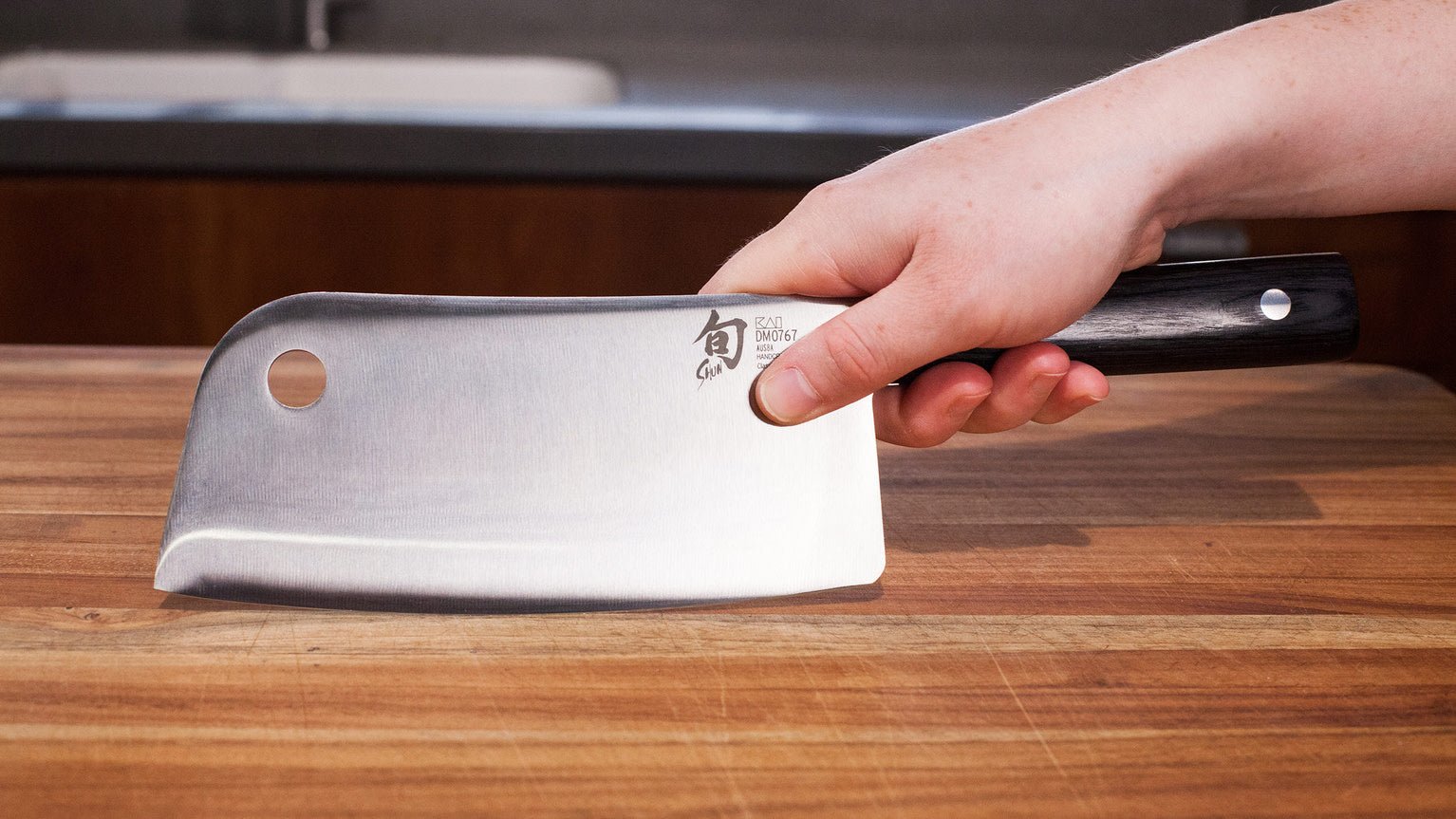
A meat cleaver is a kitchen knife with a broad, typically rectangular blade designed for heavier cutting tasks. Many models have a thick spine and a substantial overall build, although the exact weight, thickness, and edge geometry vary.
Some meat cleavers are built for heavy-duty butchery, while lighter Chinese-style cleavers are primarily designed for slicing, chopping, and preparing vegetables and boneless ingredients. Their similar broad shapes can make them look alike, but they are not necessarily interchangeable.
The best cleaver for your kitchen depends on what you prepare, how often you use it, and whether you need a knife for general chopping or heavier meat-processing work.
Checklist: What Should You Know Before Using a Meat Cleaver?
Before adding a cleaver to your kitchen routine, consider the following:
-
Choose a cleaver designed for your intended cutting tasks.
-
Check the manufacturer's guidance before cutting through bones.
-
Use a stable cutting board suitable for heavy chopping.
-
Keep the blade sharp and the handle secure.
-
Use controlled movements rather than swinging the knife recklessly.
-
Keep your free hand clear of the blade's path.
-
Clean and dry the cleaver after use.
-
Store it securely so the blade cannot injure someone or damage other tools.
Once you have the right tool and a safe setup, you can make better use of the cleaver's strengths.
What Are the Main Benefits of a Meat Cleaver?
![]()

![]()
1. It Helps Break Down Large Cuts of Meat
One of the best-known uses of a meat cleaver is breaking down large cuts of meat into smaller, more manageable portions.
Its broad blade and substantial construction can make certain heavy-duty cuts easier to control than they would be with a lightweight slicing knife. This can be useful when preparing large quantities of meat for a restaurant, catering operation, or home kitchen.
However, the correct technique and blade type matter. A cleaver intended for meat and soft tissue should not automatically be used to split bones. For heavy butchery, use a cleaver specifically designed for the task or the appropriate butcher's tool.
2. It Can Handle Dense Vegetables

Some cleavers are useful for chopping firm vegetables such as cabbage, squash, and other dense produce, provided the knife's design is suitable for the job.
The broad blade gives you a large cutting surface, while the weight of some models can help the edge move through ingredients with controlled downward pressure.
For everyday vegetable preparation, a lighter Chinese-style cleaver may be a better choice than a heavy bone-cutting cleaver. Matching the knife to the ingredient helps preserve the edge and makes preparation more comfortable.
3. Its Broad Blade Offers Practical Versatility

A cleaver's wide blade provides more than a cutting edge. Depending on the design and the task, the flat side can help transfer chopped ingredients from a cutting board to a container.
The blade also provides a large surface for handling ingredients during preparation. Use the edge for cutting and the flat side for suitable handling tasks; avoid using the knife in ways that could damage the blade or put your hands at risk.
A cleaver is not a replacement for every knife in your kitchen, but the right model can be a useful addition to a well-chosen knife set.
4. Its Weight Can Help With Certain Cutting Tasks

The weight of a meat cleaver is one of its defining features. On models designed for heavier cutting, that weight can help the blade move through appropriate ingredients without relying entirely on arm strength.
However, heavier does not always mean better. A cleaver that is too heavy for the user or the task can cause fatigue and reduce control.
Choose a weight that feels manageable, and let the knife's design do the work. Avoid excessive force, uncontrolled swings, or using a cleaver on materials it was not designed to cut.
5. It Can Be Useful for High-Volume Preparation

In a busy kitchen, having the correct tool for each job can help organize prep work. A suitable cleaver may make specific meat-cutting or chopping tasks more efficient when used by someone familiar with its handling.
The benefit comes from matching the tool to the ingredient and the task—not from using a cleaver for everything.
For many kitchens, a cleaver works best alongside a chef's knife, a boning knife, and other task-specific tools.
What Can You Use a Meat Cleaver For?
The best use depends on the type of cleaver you own.
| Kitchen task | Is a cleaver suitable? | What to consider |
|---|---|---|
| Breaking down large cuts of meat | Often, with the right model | Match the blade to the type of cut |
| Chopping dense vegetables | Yes, with a suitable cleaver | A lighter cleaver may offer better control |
| Cutting through bones | Only with a cleaver designed for it | Follow the manufacturer's instructions |
| Slicing boneless meat | Sometimes | A slicing or chef's knife may be more precise |
| Transferring chopped vegetables | Often | Use the broad blade carefully |
| Fine slicing and delicate cuts | Not always | A thinner, lighter knife may be easier to control |
The important distinction is between a heavy meat cleaver designed for butchery and a lighter cleaver intended for general food preparation. Their appearances may be similar, but their construction and appropriate uses can differ considerably.
How Do You Choose the Right Meat Cleaver?
A good meat cleaver should suit the work you actually do. Consider these features before buying one.
Blade Design
Look at the blade's thickness, edge shape, and intended purpose. A heavy-duty cleaver designed for suitable bone-cutting tasks is different from a thin-bladed cleaver made for vegetables and boneless ingredients.
Check the product specifications instead of relying on the knife's appearance alone.
Weight and Balance
A heavier cleaver may be helpful for certain demanding cuts, but it should still feel manageable in your hand.
Look for a balance that allows controlled movement without excessive effort. If possible, handle the knife before purchasing it.
Handle Comfort and Grip
A secure, comfortable handle supports control during repeated use. Look for a handle that fits your hand, feels stable when dry, and is designed for kitchen work.
Inspect the handle regularly for looseness, cracks, or other damage. Stop using a knife if the handle or blade attachment becomes unsafe.
Maintenance Requirements
Different blade materials require different care. Check the manufacturer's recommendations for cleaning, drying, sharpening, and storage.
A knife that is easy for you to maintain is more likely to remain useful over time.
How Do You Use and Maintain a Meat Cleaver Safely?
A meat cleaver is a substantial cutting tool, so safe handling is essential.
-
Use a stable cutting board. Make sure it does not slide around during preparation.
-
Keep your grip controlled. Hold the handle securely and keep your other hand away from the cutting path.
-
Use the right knife for the job. Do not use a general-purpose cleaver to split bones unless the manufacturer specifically identifies it as suitable.
-
Avoid excessive force. Heavy, uncontrolled swings can cause the blade to slip or damage the cutting surface.
-
Keep the blade in good condition. Follow the appropriate sharpening and maintenance instructions.
-
Clean it promptly. Wash according to the manufacturer's guidance and dry thoroughly to reduce the risk of corrosion.
-
Store it securely. Keep the blade protected and prevent it from moving freely in a drawer or bag.
A sharp, properly maintained knife used with suitable technique is generally easier to control than a damaged or poorly maintained one. Never try to catch a falling knife; step away and let it fall.
How Should You Store and Transport a Meat Cleaver?
A cleaver should be stored so its edge is protected and the blade cannot accidentally injure someone. Use a suitable blade cover, protective storage solution, or secure knife-storage system that accommodates the cleaver's dimensions.
If you transport kitchen knives between home, culinary school, and work, keep them secured rather than loose alongside clothing or other equipment. Check that any blade guard or compartment is specifically suitable for the cleaver's size and shape.
For chefs who regularly carry their tools between kitchens, Chef Sac's chef bags and culinary gear offer options to explore for organizing and transporting kitchen equipment. Always confirm that your chosen storage solution safely accommodates the specific tools you carry.
If you are building out your kitchen setup, you can compare Chef Sac's full range of chef gear to find equipment that fits your workflow.
Frequently Asked Questions
Is a meat cleaver better than a chef's knife?
Neither is universally better. A meat cleaver is useful for certain heavy-duty cutting tasks, while a chef's knife is generally more versatile for everyday slicing, dicing, and chopping. Many kitchens benefit from having both.
Can you cut through bones with any meat cleaver?
No. Some cleavers are specifically designed for suitable bone-cutting tasks, while others are intended for vegetables and boneless ingredients. Check the manufacturer's specifications before cutting bones.
Can you use a meat cleaver to chop vegetables?
Yes, if the cleaver is designed for food preparation. A lighter cleaver is often more suitable for routine vegetable chopping than a heavy bone-cutting model.
Does a heavier meat cleaver work better?
Not necessarily. Weight can help with some cutting tasks, but excessive weight can make a knife harder to control and more tiring to use. Choose a cleaver that suits both the task and your ability to handle it safely.
How often should you sharpen a meat cleaver?
There is no single schedule that works for every kitchen. Sharpening frequency depends on how often you use the cleaver, what you cut, the blade material, and your cutting surface. Follow the manufacturer's recommendations and maintain the edge as needed.
How should you clean a meat cleaver?
Clean it after use according to the manufacturer's instructions, then dry it thoroughly. Avoid leaving the blade wet or storing it while dirty, as this can affect the blade's condition and kitchen hygiene.
How should you store a meat cleaver in a chef bag?
Use a secure storage compartment or blade protection specifically suited to the cleaver's size and shape. Do not assume a narrow knife guard or standard knife slot will fit a broad cleaver. Keep the blade secured so it cannot shift during transport.
Key Takeaways
-
A meat cleaver is useful for specific heavy-duty cutting tasks and, depending on the design, certain vegetable-preparation jobs.
-
Not every cleaver is designed to cut through bones.
-
The blade design, weight, balance, and handle all affect how well a cleaver suits your work.
-
Safe technique, proper cleaning, and regular maintenance help keep the tool in good condition.
-
Secure storage is essential when keeping a cleaver in the kitchen or transporting it between workplaces.
The biggest benefit of a meat cleaver is having the right tool for the right task. Choose a model suited to your kitchen work, learn its limitations, and keep it properly maintained so you can use it with confidence.
About the Author
Keith Chiu is the founder of Chef Sac, a chef gear brand built for culinary professionals, culinary students, line cooks, caterers, private chefs, and serious cooks who care about how they carry their tools.
Chef Sac was created to give chefs a better way to organize, protect, and transport the tools of their craft. From knife bags and chef backpacks to aprons, knife guards, and everyday chef carry gear, Chef Sac is built for real kitchen workflows and the Culinary Mavericks who show up prepared.


Experience the adrenaline-pumping excitement of Turbo Moto Racer as you take control of powerful motorcycles through breathtaking landscapes. Navigate your way along high-speed highways, skillfully dodging obstacles for an exhilarating ride. https://turbomotoracer.gitlab.io/